Many people assume that a cleaner mouth comes from pressing the toothbrush harder. In reality, good brushing is about coverage and consistency, not force. Your brush needs to cover the outer, inner, and chewing surfaces of every tooth — while staying gentle on your gums. Pressing harder often makes the routine uncomfortable and can wear down enamel and irritate gums over time, without actually cleaning the spots you keep missing.
Here is the simple routine most dentists recommend for adults: brush with fluoride toothpaste for about two minutes, twice a day, including last thing at night before sleep. The night-time brush matters most because saliva flow slows during sleep, giving bacteria longer undisturbed hours to work on leftover food and plaque. If your dentist has given you personal advice that differs — for example, because of gum disease, braces, or a medical condition — their guidance comes first. What follows is a practical way to make those two minutes genuinely effective.

Set up your brush and toothpaste for gentle cleaning
The tools you choose decide how easy or difficult good brushing feels. An uncomfortable brush makes you rush, press harder, or skip areas. A few minutes spent choosing well pays off every single day.
Pick a brush that fits comfortably
A small-headed brush with soft bristles suits most adults. The small head lets you reach the back molars and the inner surfaces of the front teeth without straining your jaw open. Soft bristles clean along the gumline perfectly well when you use them right. Medium or hard bristles do not clean any better — they are just more likely to damage your gums and enamel.
Manual and electric brushes both work well. Electric brushes with a pressure sensor can help if you tend to scrub hard, because the brush pauses or flashes when you press too much. Whichever type you use, replace the brush or brush head roughly every three months, or sooner if the bristles look splayed and bent. Worn bristles lose their shape and stop cleaning the gumline properly. After a cold or flu, swapping in a fresh brush is sensible — though honestly, plain wear is the bigger reason to replace it.
Give your tongue brief attention too. Bacteria build up on your tongue and cause bad breath. A few gentle sweeps from back to front with your toothbrush, or a dedicated tongue scraper used lightly, is enough. There is no need to press hard or reach so far back that you gag — a comfortable, light pass once a day makes a noticeable difference to freshness.
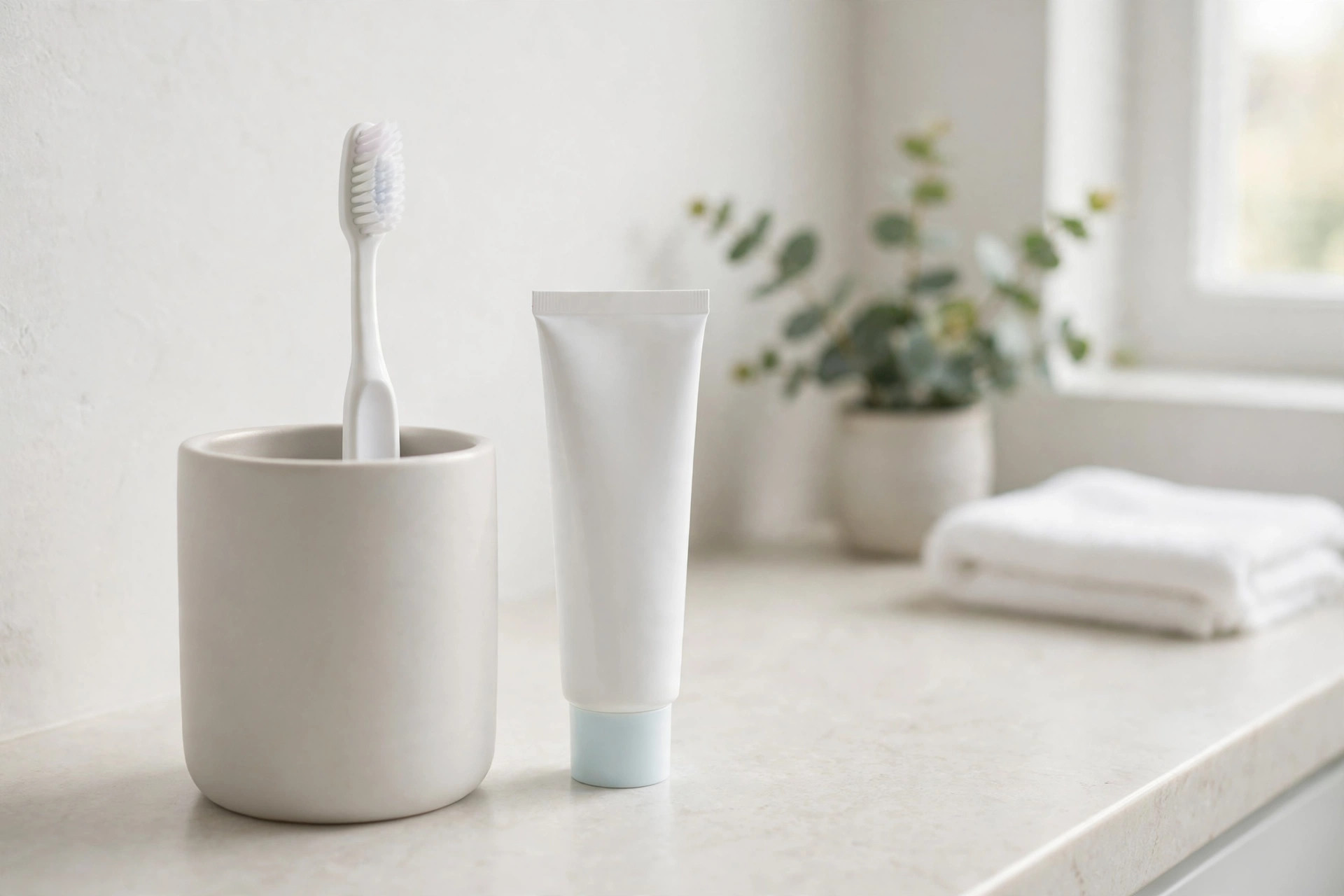
Store the brush upright in open air so it dries between uses. Avoid sealed caps for daily storage, since a damp, closed environment encourages bacterial growth on the bristles. There is no need to soak the brush in mouthwash or disinfectant; rinsing it under running water and letting it air-dry is enough.
Use the right amount of fluoride toothpaste
For adults, a pea-sized amount of fluoride toothpaste is enough. More paste does not clean better — it mainly creates extra foam that tempts you to spit and finish early. Fluoride strengthens tooth enamel and helps reverse the very early stages of decay, which is why dentists recommend it as the standard choice for daily brushing.
When you finish, spit out the excess toothpaste but try not to rinse your mouth out thoroughly with water straight away. Leaving a thin film of fluoride on the teeth gives it more time to work. This takes a little getting used to, but most people adjust within a week. If the taste bothers you, a tiny sip of water is fine — the goal is simply to avoid washing all the fluoride away immediately.
Children need smaller amounts and adult supervision, and the guidance differs by age, so follow your dentist’s advice for young children rather than copying the adult routine.
Follow a mouth route that covers every surface
Most people brush the easy-to-see front teeth well and unconsciously rush the rest. A fixed route removes the guesswork. Think of the mouth in four sections — upper right, upper left, lower right, lower left — and spend about thirty seconds on each. Many electric brushes include a timer that pulses every thirty seconds to help you move on.
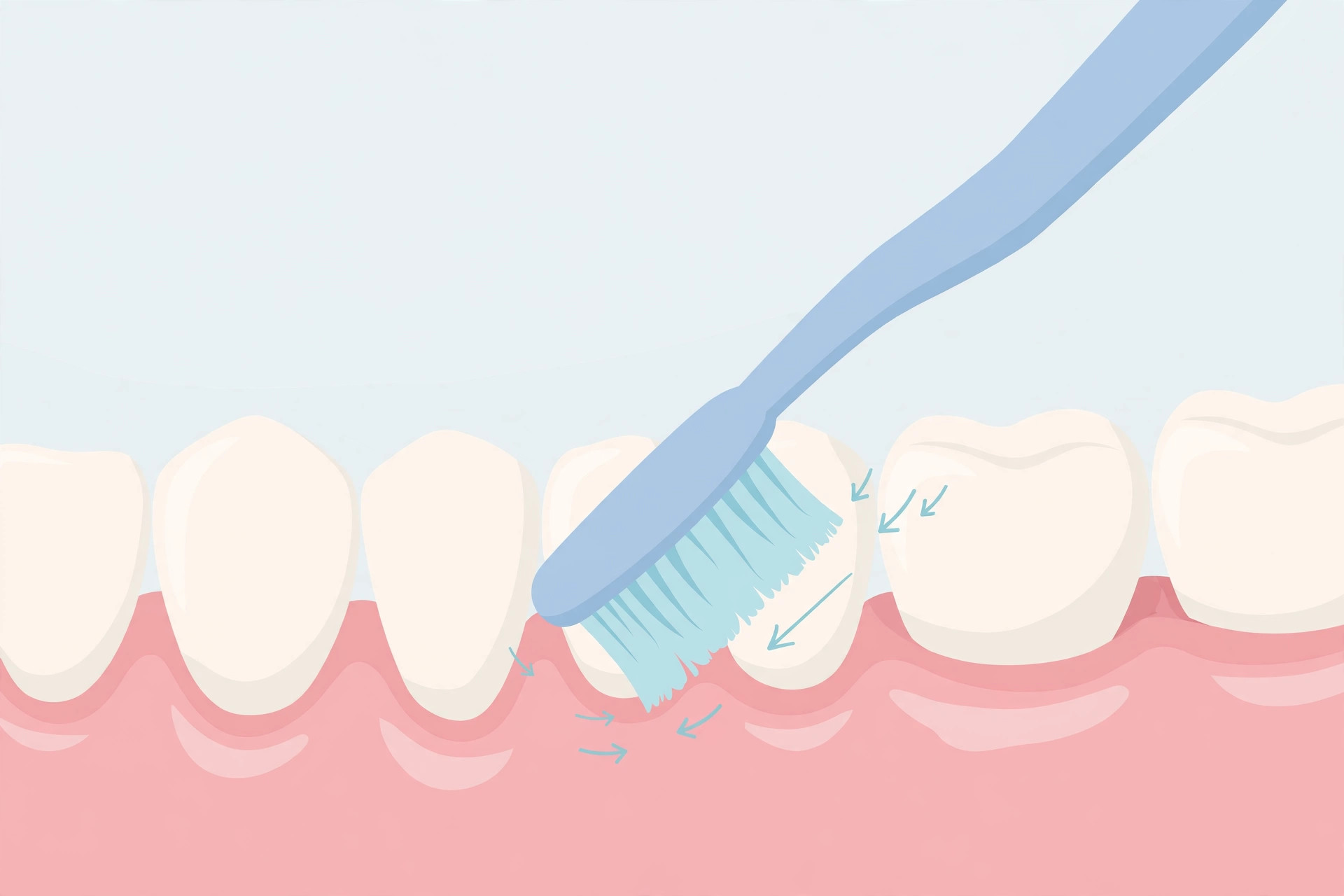
Start wherever you like, but always start in the same place so the habit becomes automatic. Angle the bristles toward the gumline at roughly forty-five degrees and use short, gentle strokes, moving the brush a tooth or two at a time rather than scrubbing across a whole row. Let the bristles do the work. On the chewing surfaces, short back-and-forth strokes are fine. The whole routine should feel calm, never rushed or painful.
Give the inner surfaces a deliberate step
The inner sides of your teeth — the parts your tongue touches — collect plaque just as easily as the visible outer sides, but they are the ones most people skip. Make them a deliberate step in your route rather than an afterthought. For the inner surfaces of the front teeth, top and bottom, turn the brush vertically and use gentle up-and-down strokes with the tip of the brush head. This small adjustment reaches areas that horizontal scrubbing misses.
The backs of the last molars deserve the same attention. Curve the brush slightly around the final tooth in each corner of the mouth. These teeth are hard to see, which is exactly why decay often starts there unnoticed. Spending a few extra seconds on them is one of the highest-value parts of the whole routine.
If you have just eaten or drunk something acidic — citrus, fizzy drinks, vinegar dressings — wait about thirty minutes before brushing. Acid temporarily softens the enamel surface, and brushing immediately can wear it away faster. Rinse with plain water in the meantime and let saliva do its natural repair work first.
Keep pressure light and strokes short
If your gums bleed, your bristles splay within weeks, or brushing feels like hard work, you are almost certainly pressing too hard. Light pressure means the bristle tips just touch the tooth and gumline without bending flat. A useful test: hold the brush with your fingertips rather than a full fist grip. A fingertip grip naturally limits how much force you can apply.
Short strokes matter because long, sweeping scrubbing motions skip the curved areas where the tooth meets the gum. Move the brush only a few millimetres at a time, pausing briefly on each tooth. Two minutes of this kind of brushing cleans far better than two minutes of vigorous scrubbing. If you use an electric brush, guide it slowly along the teeth and let the powered motion do the cleaning — pushing it like a manual brush defeats the design.
Protect the routine so it lasts
Brushing pays off through years of repetition — not through one perfect session. Small supporting habits keep the routine consistent and extend its benefits.
Clean between teeth and look after the brush
A toothbrush cannot fully clean the tight contacts between teeth, where decay and gum problems often begin. Clean between your teeth once a day with floss, interdental brushes, or another tool your dentist recommends. If you are new to this, expect slight tenderness or minor bleeding at first; with gentle daily practice over one to two weeks, healthy gums usually settle. Persistent bleeding is a reason to ask your dentist for advice, not a reason to stop.
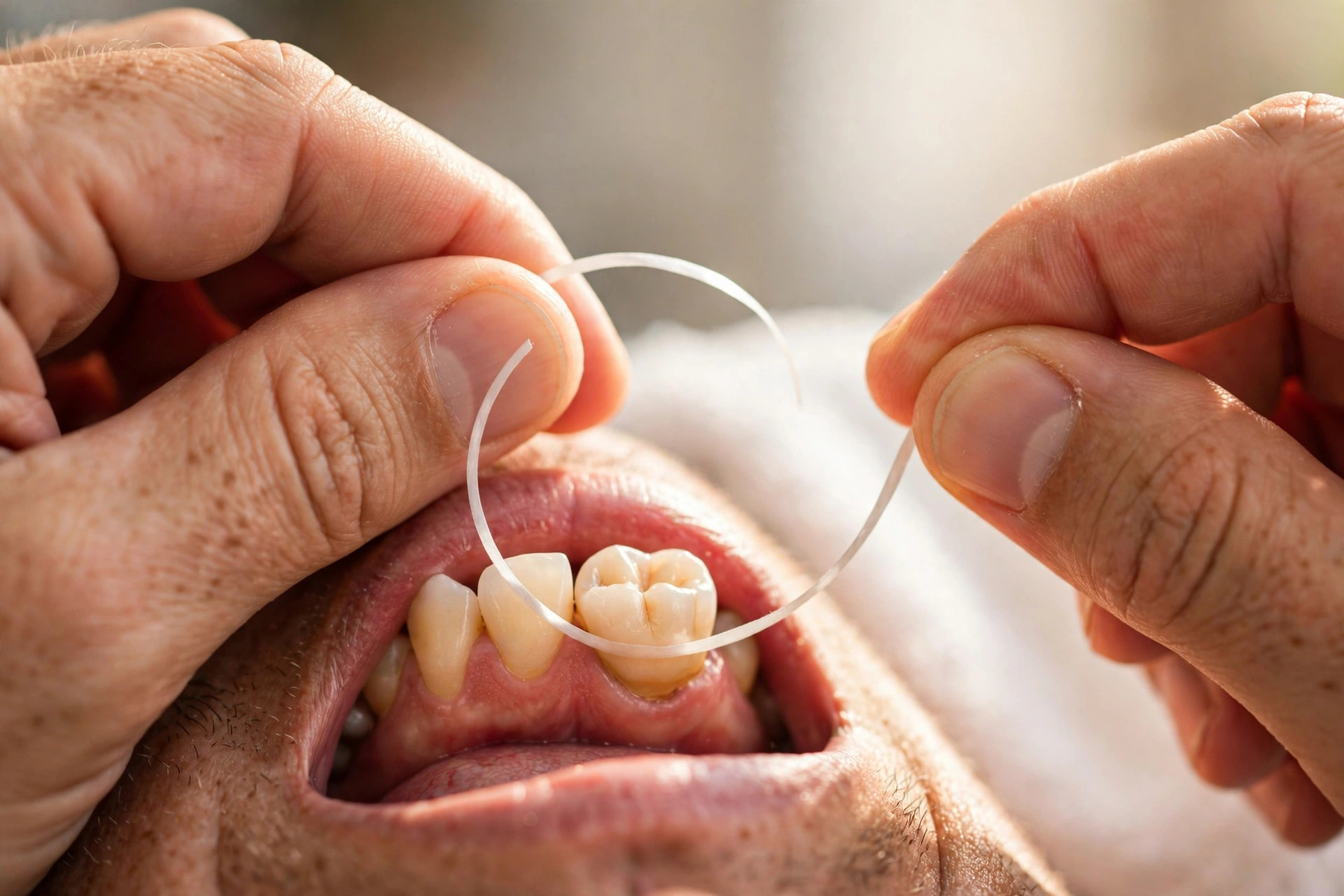
Keep the two-minute routine anchored to fixed moments in your day — for example, right after breakfast and right before bed — so it survives busy or tired evenings. If you are exhausted, a gentle one-minute brush is far better than skipping entirely; perfection is not required, regularity is.
See your dentist for regular check-ups even when nothing hurts. Most adults benefit from a check-up every six to twelve months, though your dentist will recommend the interval that suits your mouth. A professional can spot early changes you cannot feel, advise whether your technique needs adjusting, and recommend the right interdental tool for your mouth. The visit often includes a scale and polish to remove hardened tartar — something no home routine can shift. Brushing well at home and visiting the dentist regularly work as a pair — neither replaces the other.
Technique matters more than force. Hold your brush at a gentle 45-degree angle where the teeth meet the gums, and use short, light strokes rather than scrubbing hard. Electric toothbrush users can simply guide the brush slowly along each tooth and let the bristles do the work. Rushing through in under a minute leaves plaque behind, so aim for a full two minutes — many people find that playing a favourite song helps them keep track without watching the clock.
Sources and further reading
The sources listed here back up the general health information in this guide. The examples and daily routines are practical illustrations — not personal medical advice.
This article is for general education only. It was created with AI assistance and has not been clinically reviewed. For guidance about your own situation, please speak with a qualified health professional.