
Seeing blood in the sink while brushing can be unsettling. A pink tinge on the toothbrush or a metallic taste in the mouth makes many people worry that something is seriously wrong. In most cases, bleeding gums point to gum inflammation caused by plaque building up along the gumline — a common and usually manageable problem. But bleeding can also come from rough brushing technique, medicines, hormonal changes, or less commonly, other health conditions. Understanding the pattern helps you respond sensibly rather than panicking or ignoring it.
One important principle comes first: do not stop cleaning the area because it bleeds. Avoiding the bleeding spot lets more plaque collect there, which makes the inflammation worse and the bleeding heavier — a frustrating cycle. At the same time, brushing harder is not the answer either. Gentle, thorough cleaning combined with timely professional care is the balanced approach that actually resolves most cases.

Notice the pattern before you change anything
Bleeding is a symptom, not a diagnosis. A few days of careful observation gives you useful information to act on and to share with your dentist if the problem persists.
Where and when the bleeding appears
Pay attention to the details. Does the bleeding happen every time you brush, or only occasionally? Is it limited to one area — for example, between two specific teeth — or is it widespread across the mouth? Bleeding confined to one spot may suggest a local cause such as a rough filling edge, food repeatedly packing into that gap, or an injury from a hard piece of food. Widespread bleeding more often points to generalised gum inflammation from plaque.
Notice what triggers it. Bleeding mainly during brushing or flossing differs from gums that bleed on their own while eating soft food or even at rest. Bleeding that starts on its own, or bleeding that is heavy and hard to stop, needs prompter professional attention. Also note anything that comes along with it: swollen or puffy gums, tenderness, persistent bad breath, or teeth that feel slightly loose. These details help a dentist narrow down the cause quickly instead of starting from zero.
Think about recent changes too. A new medicine, a new toothbrush with firmer bristles, pregnancy, a stretch of stressful weeks with rushed brushing, or an illness can each coincide with the start of bleeding. Pregnancy deserves a special mention: hormonal changes make gums more reactive to plaque, so some women notice bleeding even with unchanged brushing. This pregnancy gingivitis usually settles after delivery, but gentle thorough cleaning during pregnancy still matters, and your dentist can advise on safe care. A short note on your phone with these observations is genuinely useful at an appointment.
What rough technique can do
Many cases of bleeding come not from disease but from the way people brush. Scrubbing hard with a firm-bristled brush, especially with horizontal strokes across the gumline, can injure the delicate gum tissue. The gums respond with soreness and bleeding that looks alarming but improves quickly once the technique softens.
Check your own habits honestly. If your brush bristles splay outward within a month, you are pressing too hard. Switch to a soft-bristled brush, hold it with a light fingertip grip, and use short gentle strokes angled toward the gumline. Give the gentler approach at least a week before judging the result — irritated gums need a little time to calm down. If bleeding continues despite two weeks of careful, gentle, thorough cleaning, the cause is unlikely to be technique alone, and a dental assessment is the right next step.
Why plaque control matters for gum health
The most common reason gums bleed is gingivitis — inflammation of the gums caused by plaque, the soft sticky film of bacteria that forms on teeth every day. When plaque sits undisturbed along the gumline, the gum tissue reacts with redness, swelling, and a tendency to bleed. The encouraging news is that early gingivitis is reversible with consistent cleaning and professional care.
Keep the gumline in the cleaning route
Plaque causes the most trouble exactly where the tooth meets the gum. Angle your brush bristles toward the gumline and spend time on this border with every tooth, outer and inner surfaces alike. This is also where floss or interdental brushes earn their value: the contacts between teeth trap plaque that brushing alone cannot fully reach, and the gum tissue between teeth is often the first to bleed.
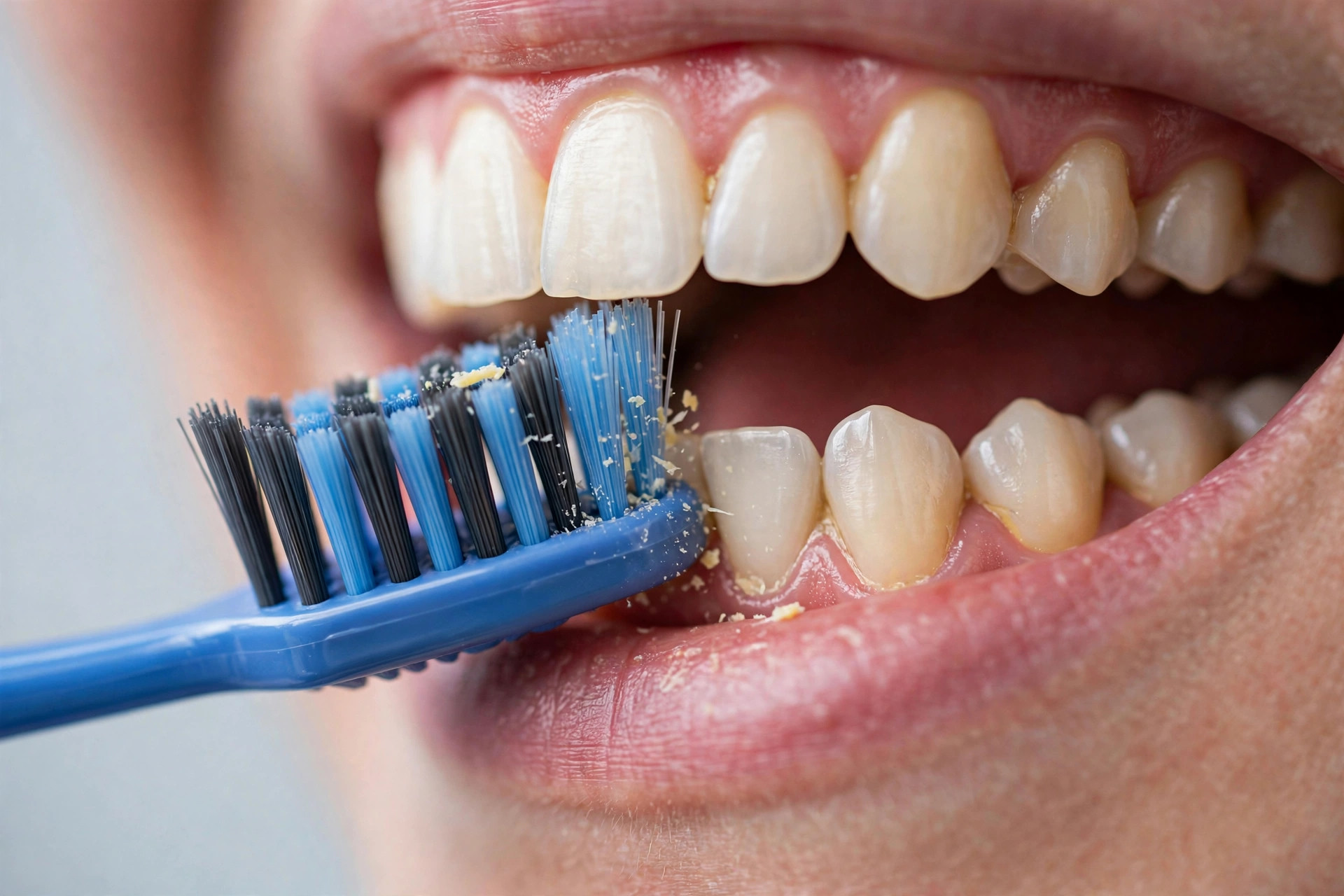
Be systematic rather than forceful. Cover every tooth, every day, twice a day, for about two minutes with fluoride toothpaste. People who bleed often unconsciously rush the sore areas; try to give those spots the same calm attention as the comfortable ones. An electric toothbrush with a built-in timer can help here, since it paces you through the mouth and many models warn you when you press too hard. Gentle consistency over weeks is what reverses early inflammation.
Be consistent rather than forceful
It is tempting to attack bleeding gums with harder brushing, longer sessions, or strong antiseptic mouthwash used aggressively. Resist that urge. Hard brushing damages tissue, and overusing strong mouthwash can irritate the mouth without addressing the plaque at the gumline. Some mouthwashes also stain teeth with prolonged use and should only be used on professional advice.
What actually works is almost boring: gentle, complete cleaning, twice daily, every day, plus cleaning between the teeth. Most people with early gum inflammation notice less bleeding within one to two weeks of this routine. Two wider health factors are worth knowing. Smoking restricts blood flow to the gums, which can mask bleeding while allowing deeper disease to progress silently — smokers may have serious gum problems with surprisingly little bleeding, another reason not to use bleeding as the only measure of gum health. Diabetes and gum disease influence each other in both directions: high blood sugar worsens gum inflammation, and treating gum disease can modestly improve blood sugar control. Think of it as calming the gums rather than fighting them. If you wear dentures, a retainer, or orthodontic appliances, keep those clean too, since plaque collects on them and irritates the nearby gums.
When to book a dental review
Home care handles the mild, early cases. Professional assessment handles everything else — and there is no virtue in waiting months to find out which category you are in.
Signs that need prompt attention
Book a dental appointment if bleeding persists beyond two weeks of gentle, thorough daily cleaning, if it is getting heavier rather than lighter, or if your gums look very swollen, feel painful, or are pulling away from the teeth. Bleeding that starts on its own without brushing, bleeding that is difficult to stop, or bleeding accompanied by loose teeth, persistent bad breath, or sores that do not heal should be assessed promptly.

Mention your full situation at the visit. Some prescription medicines, including blood thinners, can make gums bleed more easily — never stop a prescribed medicine because of gum bleeding; instead, tell both your dentist and your doctor so they can coordinate. If you take a blood thinner and need a deep cleaning or gum procedure, the dentist may consult your doctor about timing, but routine check-ups and gentle home care continue as normal. Pregnancy, diabetes, and smoking all affect gum health and change the advice you need. A professional cleaning to remove hardened plaque, known as tartar, is often the turning point, since tartar cannot be removed by brushing at home. The procedure — called scaling — uses fine instruments or ultrasonic tips to lift tartar from above and below the gumline. It may leave you mildly tender for a day, but it is the essential reset that lets your home care actually work afterwards. Your dentist will also check the depths around each tooth to see whether inflammation has affected the supporting structures, and advise how often you need review visits. Between visits, keep up the gentle routine and note whether things improve.

Early gum disease caught and treated stays a small problem. Left alone, it can progress to deeper structures that support the teeth — a far more serious condition. Acting on bleeding gums early is one of the simplest ways to protect your smile for the long term.
Do not ignore bleeding that persists beyond a week or two of gentle, consistent cleaning. While early gum inflammation often improves with better hygiene, ongoing bleeding can signal gum disease that needs professional treatment. Your dentist can measure pocket depths, remove hardened tartar you cannot reach at home, and check for other contributors. Early treatment is simpler, cheaper, and far more comfortable than dealing with advanced gum problems later.
Regular dental check-ups catch issues early when they are easiest to treat.
Sources and further reading
The sources listed here back up the general health information in this guide. The examples and daily routines are practical illustrations — not personal medical advice.
This article is for general education only. It was created with AI assistance and has not been clinically reviewed. For guidance about your own situation, please speak with a qualified health professional.