Eight glasses. Two litres. Half your body weight in ounces. If you have ever searched for how much water to drink, you have met these confident rules — and noticed they disagree with each other. The reason for the confusion is simple: there is no single number that fits everyone. Your fluid needs shift with the weather, your activity, your food, your age, pregnancy or breastfeeding, illness, and health conditions. A useful approach to hydration responds to your life, not to a slogan.
Water is an excellent everyday drink, but it helps to think in terms of total fluid rather than water alone. Other drinks and even the moisture in food contribute meaningfully — fruits, vegetables, soups, and yoghurt are all surprisingly hydrating. The aim is to stay appropriately hydrated across the day, not to win a contest by drinking the largest possible amount. Both too little and far too much can cause problems, so the sensible target is sufficiency, comfortably maintained.
Use general guidance as a starting point, not a verdict
Health authorities in different countries suggest roughly similar ballparks for total daily water intake from all sources — commonly around 2.5 to 3.7 litres a day for men and 2 to 2.7 litres for women, with about 20 to 30 percent typically coming from food. These are population averages, not prescriptions. A small, sedentary person in a cool climate needs far less than a large, active person in summer heat. Treat the numbers as a neighbourhood to explore, not an address you must live at.
Your own signals are more informative than any chart. Thirst is the body’s built-in hydration gauge, and for most healthy adults in ordinary conditions, drinking to thirst across the day works remarkably well. The idea that thirst means you are already dangerously dehydrated is a myth — thirst appears early, while the deficit is still small and easily corrected. That said, thirst becomes a less reliable guide in certain situations: older adults often feel less thirsty despite needing fluid, and during intense exercise or illness you should drink on a schedule rather than waiting for the urge.
Notice thirst and the day’s demands
Build the habit of checking in with yourself rather than counting millilitres. Ask occasionally: am I thirsty? Is my mouth dry? Have I drunk anything in the last few hours? Then adjust for the day’s demands. Hot weather, exercise, heated indoor air in winter, air travel, and physical work all increase fluid loss and call for more intake. A salty meal may make you thirstier; a day of soups and fruit may mean you need less from the glass.
Urine colour is a practical, if imperfect, secondary gauge. Pale straw or light yellow generally suggests reasonable hydration; dark yellow or amber suggests you should drink more. Completely clear urine all day long may mean you are drinking more than necessary. Note that vitamins (especially B vitamins), certain medicines, and some foods can colour urine independently of hydration, so use this as one clue among several, not as a verdict.
Adjust for life’s special chapters
Some life stages and conditions genuinely raise fluid needs. Pregnancy and breastfeeding both increase requirements — breastfeeding mothers in particular should keep water within easy reach and drink whenever thirsty, as milk production uses significant fluid. Older adults should drink regularly through the day rather than relying on thirst, which dulls with age. Children need reminding, as they often ignore thirst while playing.
Illness changes the equation too. Fever, vomiting, and diarrhoea all increase fluid loss, and steady sipping of water or oral rehydration solutions matters more than usual — seek medical advice if you cannot keep fluids down, feel dizzy, or notice very dark urine or little urination. Certain conditions, including heart failure, kidney disease, and liver problems, may require fluid restriction rather than extra intake; if you live with one of these, follow your clinician’s guidance instead of general advice. When in doubt, your own doctor’s recommendation outranks any article.
Build drinking into ordinary routines
Most people do not fail at hydration from ignorance — they fail from friction. Water is not nearby, the bottle is empty or dirty, the day gets busy, and suddenly it is evening. The fix is environmental design: make water the easiest choice in every setting where you spend time.
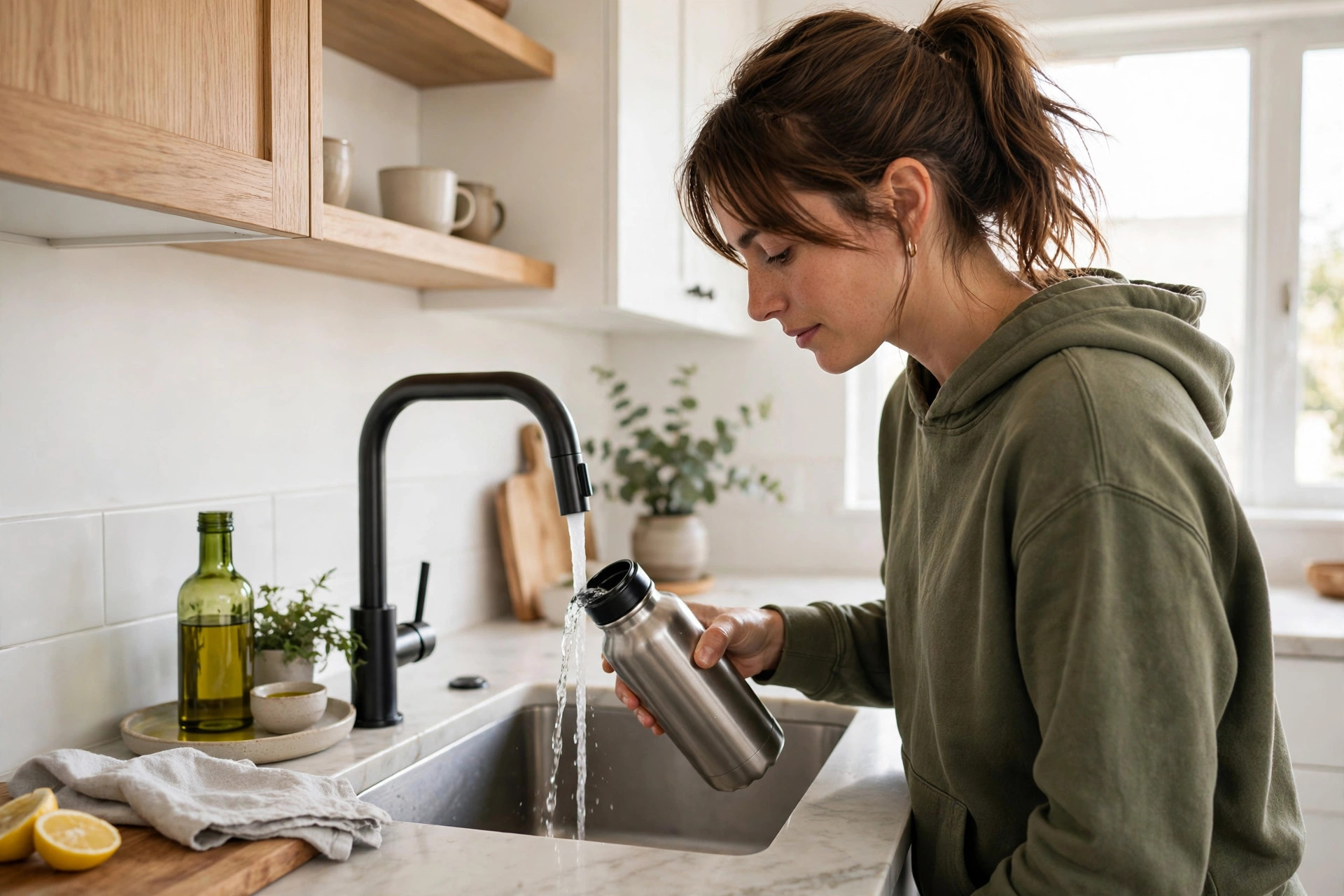
Start with visibility and proximity. Keep a clean, filled bottle or glass where you actually are — on your desk, by your favourite chair, in the kitchen where you will see it. Out of sight genuinely means out of mind for most of us. Choose a bottle you like using; an attractive, right-sized bottle you enjoy carrying beats a theoretically perfect one you leave at home. Keep it clean — a bottle that smells stale will quietly discourage you, so wash it daily.
Link drinking to meals and natural breaks
Habit stacking — attaching a new behaviour to an existing one — works beautifully for hydration. Drink a glass of water when you wake up, one with each meal, and one during your afternoon break, and you have covered a solid foundation without any extra remembering. Other natural anchors: a sip every time you refill your coffee, water alongside any medication (taken as directed), or a glass while you wait for the kettle.
Carry water when you leave the house, especially in warm weather or when you will be active. The small effort of filling a bottle before heading out prevents the all-too-common pattern of realising at 4 p.m. that you have drunk nothing since breakfast. In the office, a bottle on the desk outperforms trips to the water cooler that you keep postponing.
Choose drinks for their everyday role
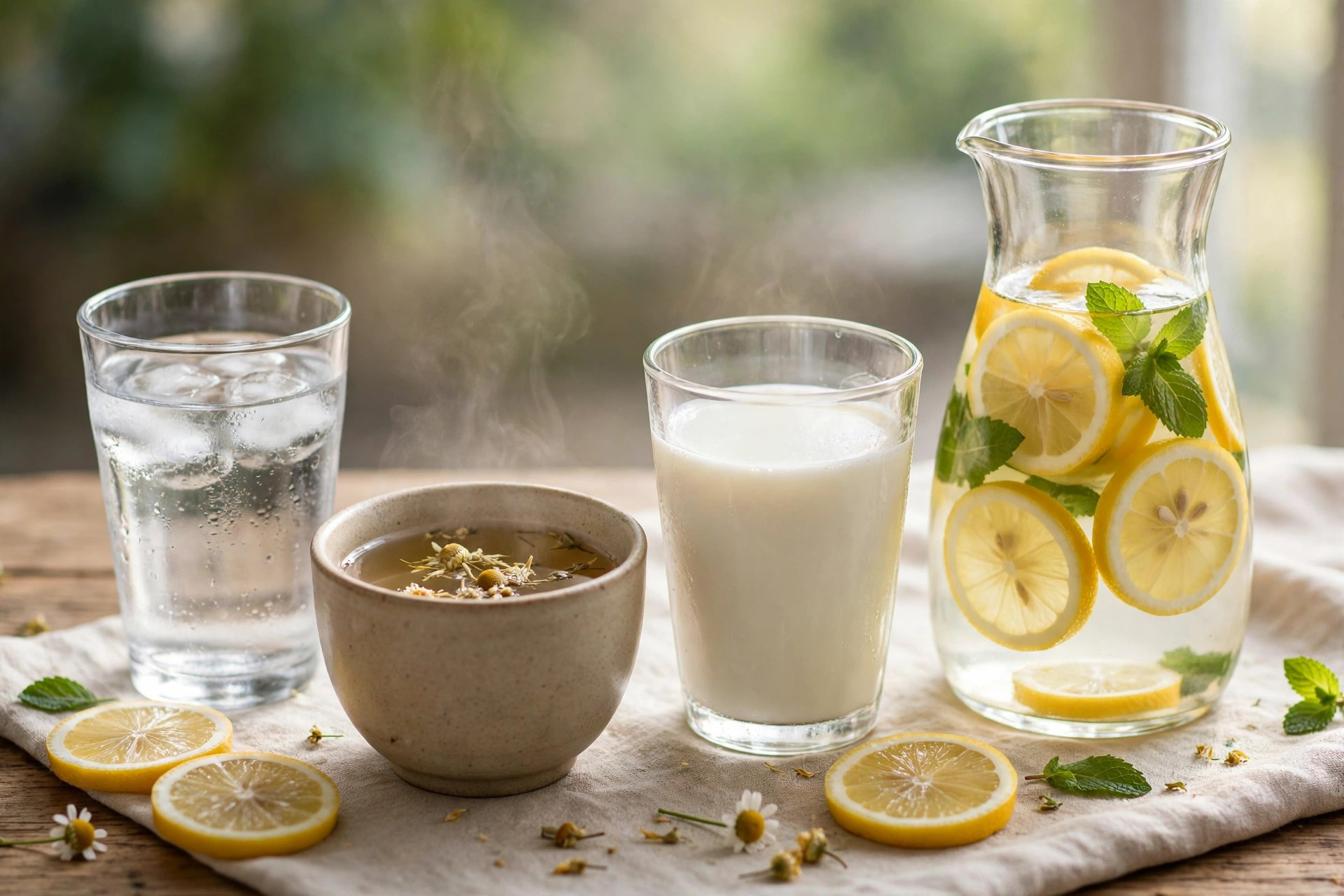
Plain water deserves its default status: zero calories, universally available, and exactly what your body expects. But it does not have to be your only drink. Unsweetened tea and coffee contribute fluid for most people in normal amounts — the mild diuretic effect of caffeine does not cancel out the water in the cup. Milk, with its protein and electrolytes, hydrates well and suits those who tolerate it. Sparkling water counts just like still.
What deserves caution is sugary drinks. Sodas, sweetened juices, and energy drinks add significant calories and sugar without improving hydration relative to water, and regular consumption is linked with weight gain and dental problems. They are occasional treats, not hydration tools. Similarly, alcohol actively promotes fluid loss and is never a hydration strategy — alternate alcoholic drinks with water if you drink at all. Diet drinks avoid the sugar but do nothing that water cannot do better.
Make gradual swaps that last
If your current drinking habits lean heavily on sugary sodas or multiple energy drinks, do not attempt an overnight transformation — abrupt overhauls rarely survive the week. Instead, make one small swap at a time and let each become normal before the next. Replace one daily soda with sparkling water with lemon. Swap the afternoon energy drink for tea. Keep the changes small enough that they feel easy, because easy changes are the ones that compound.
Flavour can be the bridge. If plain water bores you, infuse it: slices of lemon, cucumber, or orange; a few mint leaves; frozen berries that chill as they flavour. Herbal teas — peppermint, chamomile, hibiscus — offer variety without caffeine or calories and can be enjoyed hot or iced. These are not gimmicks; they are legitimate tools for someone whose palate needs more encouragement than plain water provides.
Make water the easy choice every day
Audit your environments once: is water visible and reachable everywhere you spend hours? Is the sugary alternative slightly harder to grab? Small rearrangements — water bottle front and centre in the fridge, sodas relegated to a high shelf or simply not purchased — quietly reshape habits without any willpower expenditure. You are not banning anything; you are just making the better choice the lazier choice.
Finally, keep perspective. Hydration is a daily rhythm, not a test score. Some days you will drink plenty, other days less — and your body handles normal variation easily. What matters is the overall pattern across weeks: water as your default drink, steady intake through the day, attention to thirst and conditions, and adjustments for heat, activity, and life stages. Get that pattern roughly right, and you can stop worrying about the perfect number of glasses — because you will have built something better than a rule. You will have built a habit.
If you want a quick reality check on your own habits, try a three-day experiment: each evening, jot down roughly how much you drank, when you drank it, and how you felt at three in the afternoon — alert or sluggish, headache or fine. Three days of honest notes usually reveal your pattern better than any calculator: maybe you drink plenty at meals but nothing between them, or you stay fine until the afternoon and then fade. Once you see your own pattern, one small fix — a bottle on the desk, a glass with lunch — usually does more than any new rule. And once a season, ask whether the routine still fits your life; a habit that suited a quiet winter may need rethinking when summer sport or a new job starts.
Sources and further reading
The sources listed here back up the general health information in this guide. The examples and daily routines are practical illustrations — not personal medical advice.
This article is for general education only. It was created with AI assistance and has not been clinically reviewed. For guidance about your own situation, please speak with a qualified health professional.