There is a small habit that takes about two minutes, costs nothing, and needs no equipment: slowing your breathing down on purpose. It is not a trend or a secret technique. It is simply the act of breathing slowly through your nose and gently out through your mouth, and it can take the edge off a tense afternoon.
Stress is part of normal life. A deadline, a traffic jam, a difficult conversation, a phone that never stops buzzing — your body treats many of these everyday pressures the way it would treat a physical threat. Your heart beats faster, your shoulders creep up toward your ears, and your breathing becomes short and shallow. That reaction is useful in a genuine emergency, but it is unhelpful when you are simply trying to get through a busy day.
The good news is that your breathing works in both directions. Just as stress changes your breathing, deliberately slowing your breathing can signal your body that there is no emergency. This is something researchers have studied for decades: slow, controlled breathing tends to lower heart rate, ease muscle tension, and help people feel calmer. It does not fix the source of stress, but it changes how your body carries it.
This guide explains how slow breathing calms your body’s stress response, then walks you through one simple technique you can start today. You will also find advice on how long to practise, where to use it in daily life, and — just as importantly — where the honest limits of this tool lie. Breathing exercises are a coping skill, not a treatment. If anxiety or stress is persistent or getting in the way of your life, professional support is the right next step.
How Slow Breathing Talks to Your Nervous System
Your body has two main branches of its nervous system that handle the balance between effort and rest. One branch — often called the fight-or-flight system — prepares you for action: heart racing, muscles ready, breathing quick. The other branch, sometimes called the rest-and-digest system, does the opposite: it slows the heart, relaxes the muscles, and settles digestion. These two systems are always working together, nudging your body toward alertness or toward calm depending on what is happening around you.
Slow breathing speaks directly to the rest-and-digest branch. When you extend your exhale — letting the out-breath last longer than the in-breath — your heart rate tends to slow slightly, and the signals your body sends to your brain shift from “threat” to “safe.” Scientists describe this through a pathway involving the vagus nerve, a long nerve that runs from the brain down through the body and plays a big role in calming responses. You do not need to remember any of this anatomy to benefit from it, but it helps to know that the effect is real physiology, not imagination.
One important point: a breathing exercise does not remove the cause of your stress. The deadline still exists, the traffic is still there, and the difficult conversation may still be ahead of you. What changes is your internal state. Instead of walking into a meeting with a pounding heart and a tight chest, you arrive with your body settled. That calmer state often makes it easier to think clearly and respond rather than react.
Think of it like turning down the volume on a radio. The music is still playing — the stressor is still real — but it is quieter and easier to handle. That is what a few minutes of slow breathing can do, and that is why it is worth having in your daily toolkit.
Why the Exhale Matters Most
When you breathe in, your heart rate naturally speeds up a little. When you breathe out, it slows down. This is a normal rhythm that happens with every breath. By making the exhale longer than the inhale, you spend more time in the slowing phase, which nudges the overall balance toward calm. That is why many breathing exercises emphasise a slow, extended out-breath.
Breathing through the nose on the inhale also helps. The nose filters and slightly warms the air, and nose breathing tends to encourage a slower, steadier rhythm than mouth breathing. Breathing out through the mouth, with lips gently pursed or slightly open, gives you a natural way to control the pace of the exhale so it stays slow and even.
None of this requires force. Straining, gasping, or holding your breath until you feel dizzy defeats the purpose. The breath should feel comfortable throughout — if it does not, you are trying too hard, and easing off is the right move.
What Slow Breathing Cannot Do
It is worth being honest early. A breathing exercise is not a cure for anxiety disorders, depression, trauma, or burnout. It will not fix a toxic workplace, a financial problem, or a health scare. Anyone who tells you that breathing alone can replace therapy or medical care is overselling it.
What slow breathing can do is give you a reliable, portable way to lower the intensity of a stressful moment. For everyday stress — the kind that builds up across a normal busy day — that is genuinely valuable. And for people dealing with more serious difficulties, breathing skills can be a helpful companion alongside professional treatment, not a substitute for it.

The 4-In, 6-Out Technique: A Step-by-Step Guide
Here is the core technique. It uses a slow inhale through the nose for about four counts, followed by a slow exhale through the mouth for about six counts. The counts are just a guide — seconds are not magical here; the point is that the out-breath lasts noticeably longer than the in-breath. If four and six feel uncomfortable, three in and five out works just as well. Comfort always beats precision.
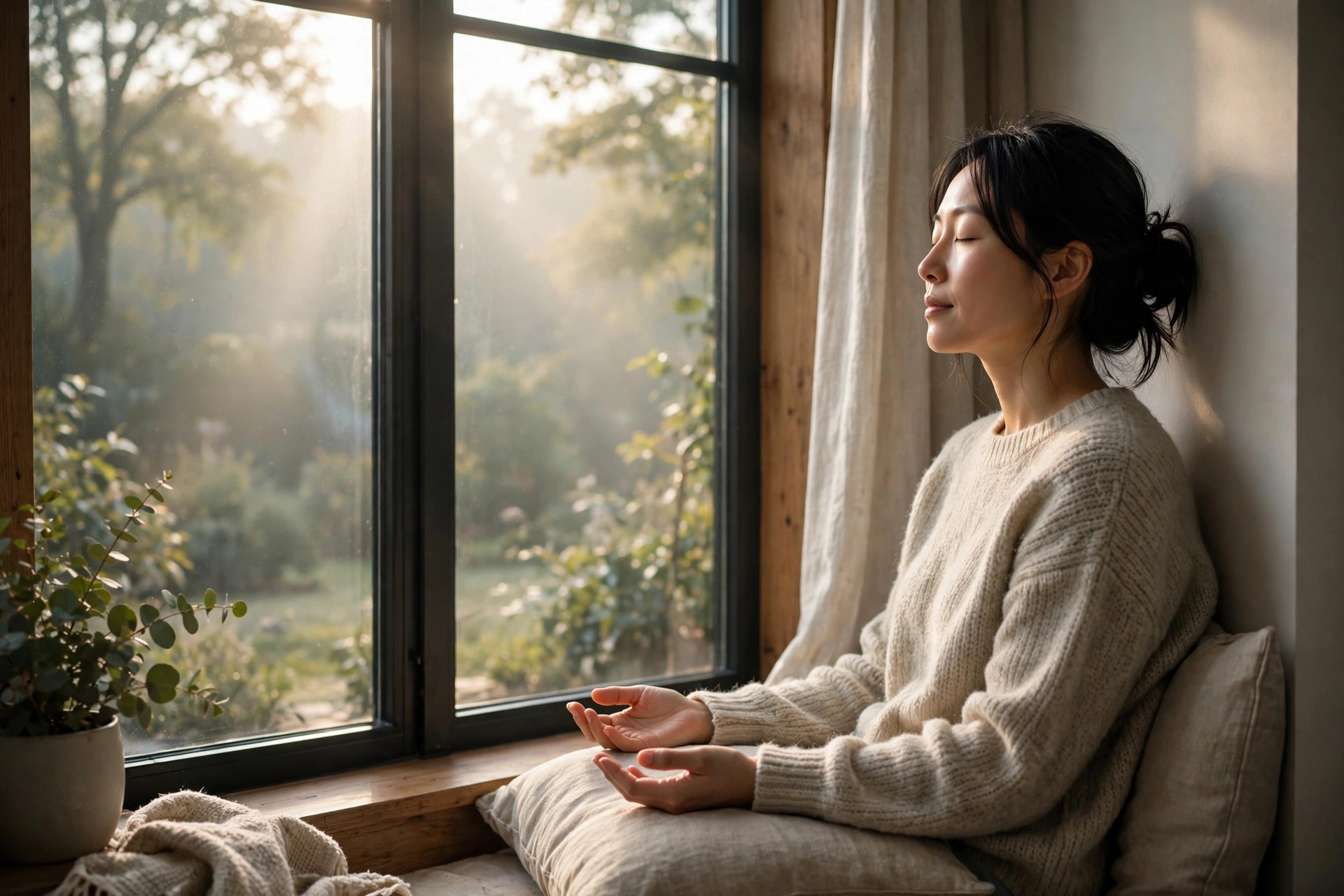
Find a position where you can relax without falling asleep. Sitting in a chair with your feet flat on the floor is ideal. Rest your hands on your lap or on your thighs. Let your shoulders drop away from your ears — most of us carry them higher than we realise. You can keep your eyes open with a soft gaze, or gently close them if that feels better.
Begin by noticing your normal breathing for a few breaths, without changing anything. This small pause helps you shift from “doing” mode into “noticing” mode. Then, breathe in slowly through your nose for a count of four. Feel your lower belly expand gently as the air comes in — the movement should be in the belly, not the chest. There is no need to fill your lungs to the maximum; a comfortable, easy in-breath is enough.
Next, let the air flow out through your mouth for a count of six. Keep your lips softly together or slightly pursed so the exhale comes out slowly and steadily, like air escaping from a balloon. As you breathe out, let your shoulders drop a little more and feel your body grow heavier in the chair. That sinking feeling is your rest-and-digest system switching on.
Continue this pattern — four counts in through the nose, six counts out through the mouth — for about two minutes, which is roughly eight to ten rounds. Keep your attention loosely on the counting and the physical sensation of the breath. Your mind will wander; that is completely normal. When you notice it has drifted, simply bring your attention back to the next inhale, without frustration or self-criticism.
When you finish, sit quietly for a few seconds and notice how your body feels. Many people notice their shoulders are lower, their jaw is less clenched, or their breathing has settled into a slower rhythm on its own. There is no required outcome — whatever you notice is fine. Then go back to your day.
How Long and How Often to Practise
Two to five minutes per session is plenty for most people. Shorter sessions done regularly beat one long session done occasionally. As a starting habit, try one two-minute session each day for a week — for example, right after lunch or before you start work. This builds familiarity so the technique feels natural when you actually need it under pressure.
Once the pattern feels comfortable, you can use it in the moment whenever stress spikes. You do not need a quiet room or special conditions. The technique works in a parked car, at a desk, in a waiting room, or even standing in a queue. The only requirement is that you are in a safe situation where you can give the breath some attention — not while driving or operating machinery.
Some people find it helpful to link the practice to an existing routine: a few rounds before opening email in the morning, or after finishing the workday before heading home. These “bookend” sessions act like a reset button between the different parts of your day. Over a few weeks, many people report that slow breathing becomes almost automatic in tense moments — the body starts to remember the calmer pattern.
Troubleshooting Common Difficulties
If counting feels distracting or stressful, drop the numbers and simply focus on making the exhale longer than the inhale. Words like “in… two… three” can be replaced by a gentle mental image, such as imagining the breath filling your belly like a soft balloon, then slowly deflating. The technique serves you, not the other way around.
If you feel light-headed, you are probably breathing too deeply or too forcefully. Ease off immediately: breathe normally for a while, and when you return to the exercise, use smaller, gentler breaths. Breathing exercises should never cause dizziness, tingling, or discomfort. If slow breathing consistently feels unpleasant, stop the exercise — it may not be the right tool for you, and that is perfectly fine.
If your mind races no matter what you do, remember that the goal is not a blank mind. Wandering thoughts are not failure; noticing them and returning to the breath is the actual practice. Each return is like one repetition of an exercise for your attention. Even a session full of distractions still gives your body the physiological benefit of the slower rhythm.

Weaving Breathing Breaks Into Real Life
A technique only helps if you actually use it, and the easiest way to use it is to attach it to moments that already happen in your day. You do not need to carve out extra time. Look for the small gaps and transitions where stress tends to spike, and plant a breathing break there.
Before meetings is a classic spot. Arriving two minutes early, sitting down, and doing six to eight rounds of slow breathing can change the whole tone of how you enter the room. Your voice steadies, your thinking clears, and you are less likely to react defensively to a challenging comment. The same applies before presentations, interviews, exams, or any performance situation where nerves run high.
In traffic or during a commute, red lights and standstills are natural pauses. While the vehicle is fully stopped — never while moving — a few slow breaths can stop frustration from building into a headache. Even on a crowded bus or train, you can breathe slowly and quietly without anyone noticing; the technique is invisible from the outside.
When you feel overwhelmed — by a full inbox, a crying child, a pile of bills, or just the general weight of a busy day — pause and give yourself two minutes before reacting. Step away if you can, even into another room. The overwhelm will still be there afterwards, but you will meet it with a steadier nervous system, which often makes the next step feel more manageable.
Bedtime is another powerful moment. Lying in bed and doing slow breathing for a few minutes can help your body transition from the day’s alertness toward rest. Many people find it eases the mental replay of the day’s events — the to-do lists and conversations that tend to loop at night. It is not a treatment for insomnia, but it is a gentler way to end the day than scrolling on a phone.
To turn this from a one-time experiment into a real habit, start small and specific. Pick just one daily moment — your morning tea, the elevator ride to your floor, the minutes before sleep — and commit to a short breathing break there for two weeks. Writing it down or setting a gentle phone reminder helps until it becomes automatic. One anchored habit is worth more than vague intentions to “breathe more.” After a couple of weeks, add a second moment if you like, or keep using the technique on demand when stress appears. There is no required progression and no levels to unlock. Some people settle into one daily session plus occasional in-the-moment use, and that is a complete, successful practice.
It also helps to notice and celebrate the small wins. Maybe you handled a tense phone call more calmly than usual, or you noticed your shoulders relaxing during a traffic jam instead of tensing up. These moments are evidence that the habit is working its way into your life — and noticing them makes you more likely to keep going.
Honest Limits: A Coping Tool, Not a Treatment
Breathing exercises are a coping tool — a way to manage the body’s stress response in the moment. They are not a treatment for anxiety disorders, panic attacks, depression, or trauma-related conditions. This distinction matters, because relying only on breathing when you need deeper support can delay getting help that would genuinely change things.
Consider speaking with a doctor, counsellor, or mental health professional if stress or anxiety feels constant rather than occasional, if it is interfering with your sleep, work, or relationships, if you are having panic attacks, or if you find yourself avoiding things that matter to you because of fear or worry. These are signs that a coping tool alone is not enough — and reaching out is a sign of strength, not weakness.
There is no shame in needing more than a breathing exercise. Just as you would see a doctor for a persistent cough rather than only drinking tea for it, persistent emotional distress deserves professional attention. Breathing skills can still be useful alongside therapy or treatment — many therapists actively teach them — but they work best as part of a bigger picture.

If someone you care about is struggling, the kindest thing you can do is listen without trying to fix everything, and gently encourage professional support if their difficulties seem persistent. You might even share this breathing technique as one small thing that helps in hard moments — offered as a comfort, not as a cure.
Everyday stress is not going away, but your relationship with it can change. A few slow breaths will not solve your problems, yet they can reliably soften your body’s alarm response and give you a steadier platform to deal with whatever the day brings. That is a modest promise — and, for a two-minute habit that costs nothing, a remarkably good one.
Start today, if you like: sit down, drop your shoulders, breathe in through your nose for four counts, and let the air drift out through your mouth for six. Two minutes. Then notice how you feel. The calm you are looking for might be closer — and simpler — than you expected.
Sources and further reading
The sources listed here back up the general health information in this guide. The examples and daily routines are practical illustrations — not personal medical advice.
This article is for general education only. It was created with AI assistance and has not been clinically reviewed. For guidance about your own situation, please speak with a qualified health professional.