
Girls Stop Growing Earlier Than Boys Because Due to the female body’s physical structure and hormonal changes—such as the rise in estrogen levels—that occur with the onset of the menstrual cycle, the growth plates (epiphyseal plates) close earlier, thereby bringing the process of height growth to an early end.
However, we cannot say that girls are always shorter than boys in height; if girls pay a little attention to their body structure, they can see a significant increase in their height and realize their dream of becoming tall.
What Is Height Growth?
Height growth is a process that begins during childhood or adolescence; it accelerates rapidly in boys, while the pace is somewhat more gradual in girls. An individual’s height depends on factors such as bones, growth plates (epiphyseal plates), growth hormone, genetics, nutrition, and hormonal changes.
Rapid height growth occurs during puberty—typically between the ages of 14 and 15 for girls and 12 and 14 for boys—bringing about changes in the bones that lead to increased stature. Height continues to increase until the growth plates fully close, a process that generally does not complete until the age of 20 or 21.
There are several factors that influence height growth, but some have a significant impact. The key factors affecting height growth include:
- Genetics
- Growth Hormone
- Puberty
- Growth Plates
- Healthy Diet & Nutrition
- Quality Sleep
- Regular Exercise
- Overall Health & Medical Conditions
The Role of Estrogen in Height Growth
The hormone estrogen is found in women and plays a role in their physical development, such as increases in height and muscle mass. It accelerates bone development and the rate of height growth; however, this process comes to an abrupt halt after the rapid growth phase. This is why a “growth spurt” (a phase of rapid increase in height) is observed in girls during adolescence.
However, it is not entirely true that a girl’s height depends solely on estrogen; there are many other factors—such as genetics, nutrition, growth hormones, sleep, physical activity, and overall health—that significantly influence height growth.
When Do Girls Stop Growing?
A girl’s height depends on growth plates (epiphyseal plates); these remain active until the age of 16 or 17, after which they cease functioning and height growth stops.
Although estrogen plays a crucial role in a girl’s height—driving significant physical changes from an early age and aiding the development of epiphyseal plates—we cannot overlook other essential factors such as genetics, nutrition, hormones, sleep, physical activity, and overall health.
Factors That Affect Height Growth in Girls
As previously mentioned, several factors influence height growth and when it stops; key factors include estrogen levels, adequate sleep, proper rest, genetics, and hormonal imbalances.

Physical Activity
This category includes activities such as running, jumping, skipping, basketball, and volleyball, which strengthen bones and aid in increasing height; yoga is also considered highly beneficial among physical activities.
Physical activity not only helps increase height but also shapes the body and improves physique, thereby enhancing one’s personality. Girls should cultivate the habit of jogging or running for 30 minutes daily from a young age, as this plays a crucial role in increasing height.
Some people believe that height growth ceases once the growth plates close; however, this is not entirely accurate, as physical activity can stimulate the growth plates and improve body posture, making you appear taller.
Sleep
Sleep can be categorized into two types: light sleep and deep sleep. During light sleep, the body does not undergo significant positive changes. In contrast, during deep sleep, the body produces the highest levels of growth hormone (GH) and enters a state of relaxation, which aids in increasing height. Elders often advise going to bed early and sleeping with legs fully stretched out; additionally, adolescents require ten hours of quality sleep.
Merely sleeping is not enough; body posture during sleep is also crucial. If the body is not in a relaxed position, sleep is frequently interrupted, which repeatedly affects the growth plates and hinders physical development.
Quality sleep is essential for the body’s energy, immune system, and mental health. While it would be incorrect to claim that sleep alone increases height, it certainly contributes to the process; in fact, sleep—combined with proper nutrition, regular exercise, and genetic factors—promotes healthy growth.
Exercise
You can incorporate yoga and sports activities into your daily routine, as exercise plays a crucial role in increasing height and maintaining physical health. Exercises specifically aimed at increasing height—such as hanging, jumping rope, swimming, Tadasana (Mountain Pose), the Cobra Stretch, the Cat-Cow Stretch, and playing basketball or volleyball—strengthen your bones, thereby aiding in height growth.
Genetics is considered the primary factor determining height. However, performing exercises incorrectly or without proper precautions can lead to a risk of injury and may have an adverse effect on your body.
Morning or evening is considered the best time for exercise; simply establish a regular schedule that is convenient for you and aim for one hour of activity daily. Always remember to warm up before starting and stretch afterwards.
Can Girls Increase Height After Growth Plates Close?
Once the growth plates close, increasing height becomes quite difficult; however, this does not mean that increasing height after this stage is impossible.
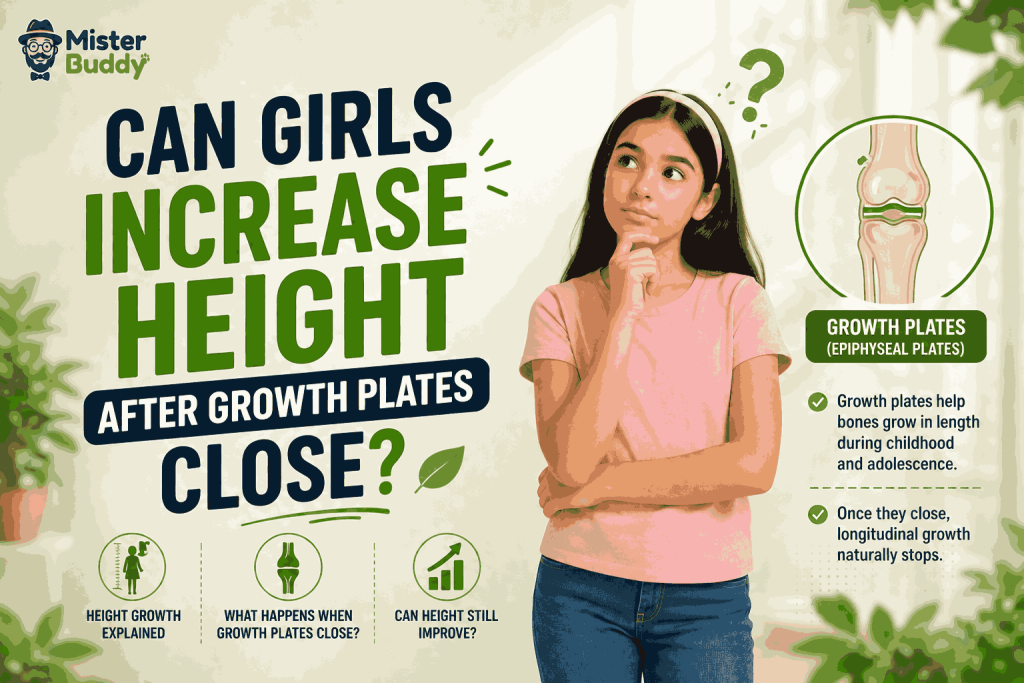
By making minor adjustments to your diet, exercise routine, and daily schedule, you might be able to increase your height. This involves practices such as regular exercise, stretching, yoga, maintaining proper posture, and consuming a balanced diet. Adopting these habits can make the body appear fitter, stronger, and more upright, potentially making a person look slightly taller.
While there is no guarantee of actual height growth, improving your posture and making slight adjustments to your skeletal alignment can create the illusion of increased height.
Conclusion
A girl’s height depends on factors such as estrogen levels, diet, genetics, and exercise; if you pay some attention to these aspects, you will certainly see a significant difference in height.