Start Meditation at Home in 2026: Meditation plays a vital role in calming the mind and relieving stress. If you have come here looking for information on how to start Meditation at home, you are in the right place.
You do not need any special or expensive equipment to practice meditation; you simply need a quiet and comfortable place where you can sit without interruption. If you have such a space, you can start meditating at home today.
What Is Meditation And How Does It Work?
It is a form of mental exercise that initiates the process of calming the mind; it enhances concentration and prevents the mind from wandering. The tradition of meditation dates back to ancient times, and it is practiced to improve mental, physical, and spiritual well-being.
Meditation is not a one-time activity but a daily practice; when performed regularly and correctly, it proves effective in reducing stress, maintaining emotional balance, and enhancing mental clarity.
The process is quite simple: one focuses on the breath, inhaling and exhaling slowly to sustain that focus. If the mind wanders, it is gently brought back to the same focal point. This proves highly effective in strengthening emotional control.
Why Should You Start Meditation at Home?
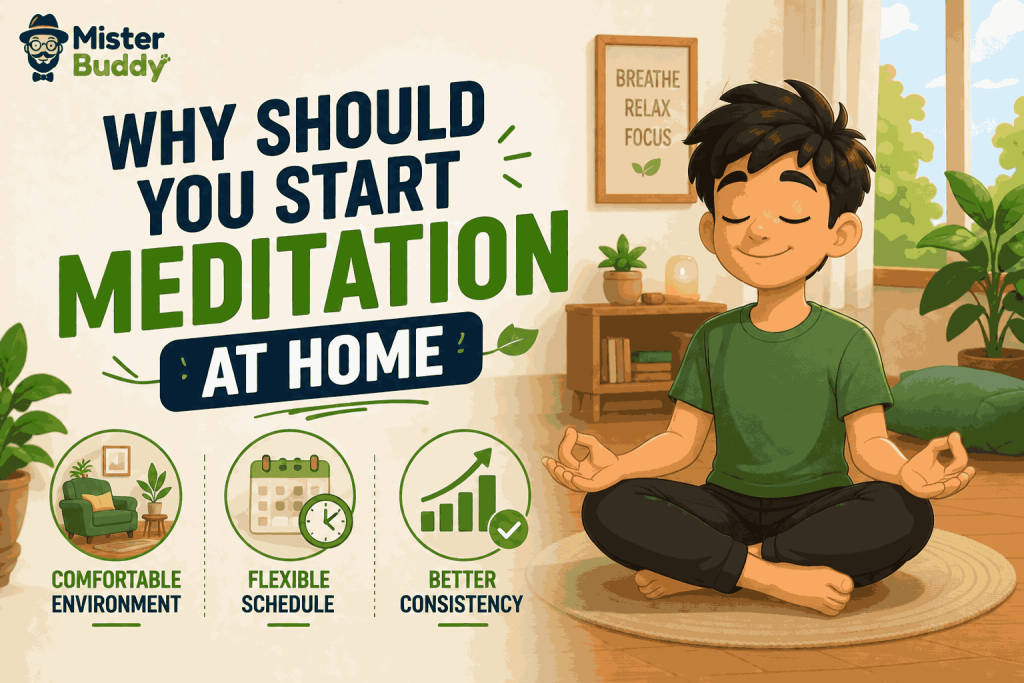
Starting meditation at home offers several benefits, such as a comfortable environment, the flexibility to choose a time that suits you, and the absence of interruptions or the need for complex equipment. Meditating for just 5 to 10 minutes at home can help steer your mental state in the right direction.
Comfortable Environment
Staying in the familiar and peaceful environment of your home can help calm your mind quickly. Visiting a new place might make you feel restless; therefore, practicing for just 5 to 10 minutes at home each morning will bring peace to your mind.
Flexible Schedule
The biggest advantage of meditating at home is that you can do it at any time, although it is more effective in the morning. You can schedule it according to the quiet atmosphere of your home and choose the time that feels most comfortable to you.
Better Consistency
Meditating in the same spot every day allows your mind to become attuned to that environment; if you change locations, your mind perceives the setting as new each time, which can reduce the depth of your meditation. Conversely, meditating in the same place at home helps your mind adopt the practice as a daily habit.
How to Start Meditation at Home (Step-by-Step Guide)
Meditating at home is a great option because you can choose the location and time that suit you best; you can also tailor the practice to your specific needs. By taking small steps initially, you can incorporate it into your daily routine. Ways to get started are outlined below.
Step 1:Choose a Quiet Place
Choose a quiet place for meditation; ideally, you should practice at home, though a park or a similar location is also suitable, provided you are not disturbed there. If you choose a noisy environment, frequent interruptions will break your concentration, and you will not achieve the best results.
Step 2: Sit in a Comfortable Position
This posture is quite simple and comfortable; keep your spine straight while sitting and ensure your body is completely relaxed. You can use a soft cushion to sit on.
If you do not wish to sit on the floor, you may sit on a chair or a bed; however, ensure that your spine remains straight and you maintain a comfortable posture.
Step 3: Focus on Your Breathing
Breathe in and out slowly—continue doing this for 5 to 10 minutes while focusing on the breathing process. If your mind wanders, gently bring your attention back to your breath.
Meditation simply means breathing slowly and consciously; you just need to feel your breath. Doing this will quickly calm your mind, and daily practice will improve your ability to concentrate. If you are a student, you should definitely practice meditation to ward off depression and anxiety.
Step 4: Start with 5–10 Minute
You might find it a bit difficult at first, so start by meditating for just 5 minutes and gradually increase the duration; you can aim for an average of 30 to 45 minutes later on, but do not try to do this on the very first day, or you might face difficulties.
Since sitting in a meditation posture for an extended period right from the start won’t be easy—and will actually be quite a challenging task—you should increase the duration gradually; once you establish consistency, you can extend the time.
Step 5: Don’t Worry About Thoughts
It is natural for unwanted thoughts to arise in the mind during meditation; therefore, whenever such a thought occurs, do not react to it immediately. Instead, simply bring your attention back to your breath and observe it with ease.
With regular practice, your mind will become accustomed to staying focused and will not wander during meditation. Meditation is a process that first brings all those unwanted thoughts to the surface and then gradually calms and clears your mind; practicing meditation at home will prove beneficial for you.
Step 6: Practice Every Day
When it comes to meditation, you should focus on just one thing: practicing it for 5 to 10 minutes every day. That is how you will start seeing good results very quickly.
Always remember that if you skip meditating for even a single day, you might feel the negative effects for the next two or three days—such as difficulty getting back into the practice or feeling lethargic while meditating.
Quick Tips for Beginners
If you are a beginner, here are some tips you should follow to maintain your rhythm in meditation.
- Meditate at a fixed time every day so that your mind becomes accustomed to it over time and accepts it.
- Start with just 5 minutes, and gradually increase the time as you become comfortable with the environment.
- Choose a quiet place for meditation, because if you select a noisy location, the noise could repeatedly disrupt your practice.
- Keep mobile phones, laptops, music players, and the like away while meditating; even a single notification from them is enough to distract the mind.
- Maintain the correct posture and a steady breathing rhythm so that your focus remains centered; frequently speeding up or slowing down your breathing will cause your mind to wander.
Conclusion
You must have enjoyed this article on meditation, which explains in detail how to practice meditation at home—including what it is and its benefits. If you still have any questions, feel free to ask in the comment box below.
Sources and further reading
The sources listed here back up the general health information in this guide. The examples and daily routines are practical illustrations — not personal medical advice.
This article is for general education only. It was created with AI assistance and has not been clinically reviewed. For guidance about your own situation, please speak with a qualified health professional.