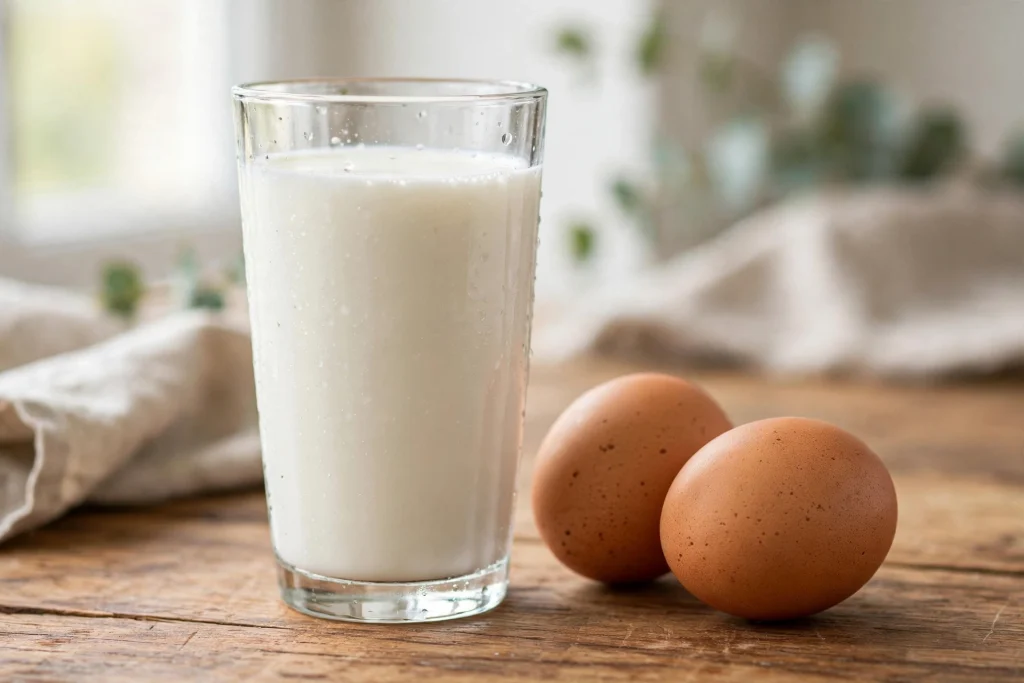
A raw egg mixed into milk is sometimes presented as a shortcut to strength. It looks simple, it is easy to drink, and people may remember seeing it in films or gym advice. However, raw eggs can carry harmful bacteria, and mixing them with milk does not remove that risk.
You do not need a raw egg drink to include protein in your meals. Cooked eggs and many other ordinary foods can provide practical options. The sensible question is which meal is safe,
affordable and suitable for you, rather than whether a drink looks like a fitness ritual.
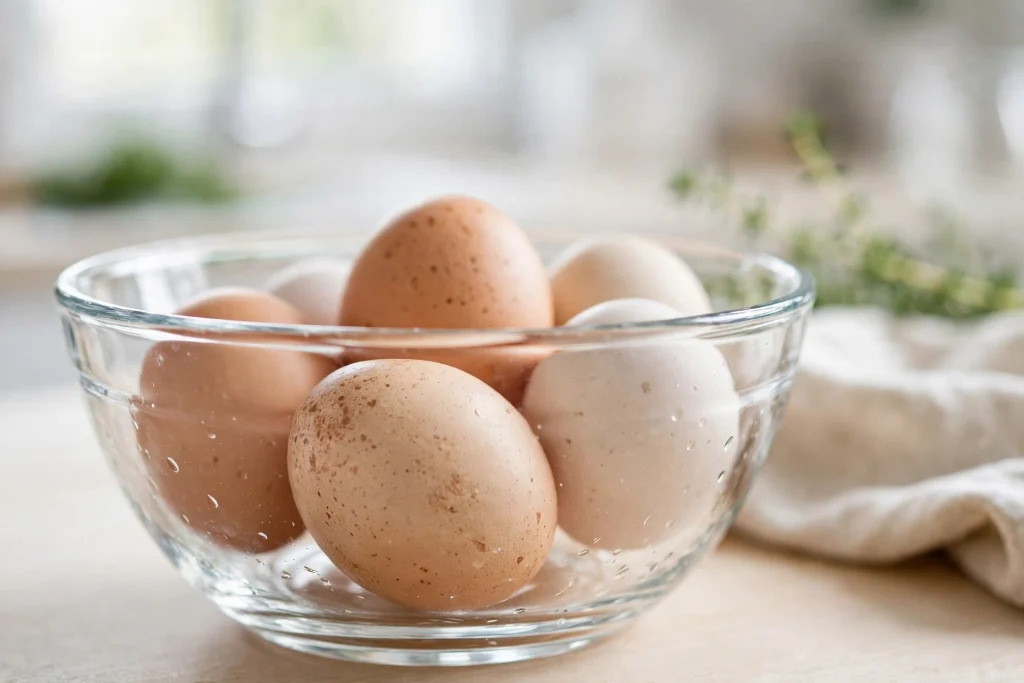
Why a clean-looking egg can still be risky
An egg can contain Salmonella even when the shell looks clean and unbroken. Appearance is therefore not a reliable safety check. Cracking the egg into milk, blending it or adding flavouring does not pasteurize it.
Foodborne illness can cause symptoms such as diarrhoea, fever and stomach cramps. Some people are more vulnerable to serious illness, including young children, older adults, pregnant people and those with weakened immune systems. Avoid serving them raw or undercooked egg preparations.
Milk does not cancel the risk
Milk changes the texture of the mixture, not the safety of the egg. Adding honey, spices or a supplement powder also does not provide a reliable method of killing harmful bacteria. A home recipe should not be treated as a substitute for controlled food processing.
If milk is used, choose an appropriate pasteurized product and store it correctly. Raw milk can introduce its own food-
safety risks. Combining two perishable ingredients makes careful handling more important, not less important.
Understand what pasteurized egg products mean
Recipes that will be eaten without thorough cooking should use pasteurized eggs or an appropriate pasteurized egg product. Pasteurization is a controlled process intended to reduce harmful germs. It is not the same as rinsing the shell or briefly warming a drink.
Check the package and follow its instructions. Do not assume that every egg sold in a supermarket is pasteurized. Products and labelling differ between countries, so read the specific information on the item you are buying.
Choose a cooked option that fits your day
A properly cooked egg with toast or roti can be a straightforward breakfast. A vegetable omelette or another cooked egg dish may suit someone who wants a larger meal. Cook eggs until the white and yolk are firm; egg dishes should reach a safe internal temperature according to official guidance.
For a drink, you can use suitable pasteurized milk or a fortified alternative without adding a raw egg. Pair it with other food if you need a more substantial meal. A drink does not have to contain every ingredient you want to eat that day.
Vegetarian meals can also be practical
Lentils, beans, chickpeas, tofu and suitable dairy foods are everyday protein options for many people. The right choice depends on preferences, allergies and the overall diet. A special gym product is not a requirement for a useful meal.
Someone who avoids eggs should not feel that progress depends on forcing them into a drink. A varied food pattern and an appropriate training routine matter more than copying a particular recipe from social media.
Keep handling separate from cooking
Wash hands and clean utensils after contact with raw egg. Keep raw egg away from ready-to-eat food, and do not reuse a bowl or spoon without cleaning it properly. Small kitchen habits can prevent a safe cooked dish from being contaminated again.
Follow storage instructions and refrigerate perishable ingredients promptly. If you prepare food for later, use suitable containers and control the time it spends out of the refrigerator. A shake carried around a warm gym bag is not a safe meal-storage plan.
Think about the whole meal, not only protein
A breakfast made around one nutrient can miss other useful parts of a meal. Consider a grain or starchy food, fruit or vegetables where appropriate, and enough food to meet your needs. Protein is part of nutrition, not a replacement for the rest of it.
If you are trying to support exercise, notice whether the meal is comfortable before activity and practical afterwards. You do not need to force down a large drink immediately because someone online described a narrow window. Individual training and nutrition needs are best discussed with a qualified professional when they are complex.
Be careful with claims about fast muscle growth
An ingredient does not create muscle by itself. Training, recovery, an adequate overall diet and consistency all matter. A raw egg shake cannot compensate for a programme that is unsuitable or for persistent lack of sleep.
Claims that a particular mixture guarantees rapid growth should raise questions. Ask whether the person is selling something, whether the claim applies to ordinary adults and whether safety has been considered. A dramatic story is not a substitute for evidence.
What to do if you feel ill after a raw egg drink
Stop consuming the suspect food and pay attention to symptoms. Seek medical advice for severe or persistent symptoms, blood in stool, significant dehydration, high fever or a higher-risk health situation. Tell the clinician what you ate and when.
Do not assume that every stomach upset is definitely from the egg, but do not hide the exposure either. Keep hydrated as appropriate and follow medical advice. If symptoms are serious, getting help is more important than identifying the exact ingredient yourself.
Practical routines that support the main advice
A safer replacement for a raw egg drink should still be convenient. Food handling, storage and ordinary protein choices work together; the following routines help you make a breakfast or snack that fits both nutrition and safety.
Refrigerate promptly after the meal
Perishable food should generally be refrigerated within two hours, or within one hour when the surrounding temperature is above 32°C or 90°F. These limits are especially important at outdoor meals and in hot kitchens. Count the time spent serving and sitting out as part of the same period.
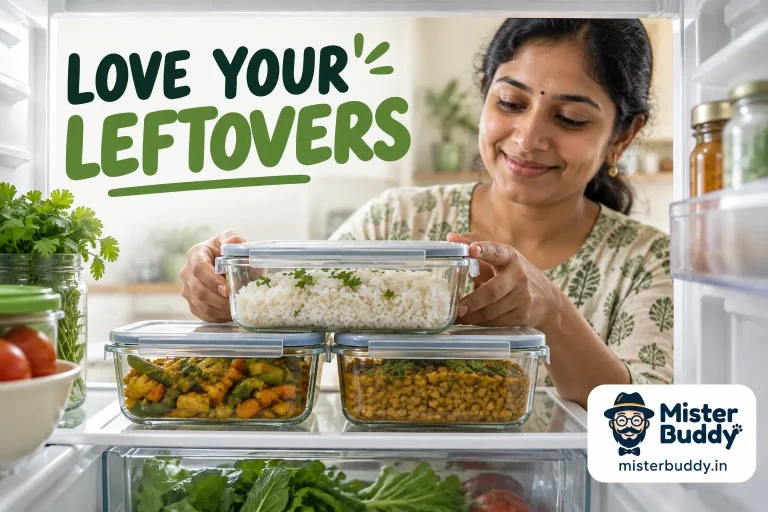
Do not leave a large pot out all evening while waiting for it to become completely cold. Divide food into smaller, shallow containers so it can cool more quickly. Small portions of hot food can go into the refrigerator; use a suitable container and avoid overloading the appliance.
Give cooling food enough space
A deep, tightly packed container can stay warm in the middle long after the outside feels cool. Shallow portions make cooling more effective and also let you reheat only what you need later. Keep containers covered or protected appropriately as they cool and store.
Do not stack a week’s worth of hot meals so tightly that cold air cannot circulate. If you regularly cook large batches, plan storage capacity before cooking. The amount you can safely store is a real limit on the size of the batch.
Keep the refrigerator cold enough
Use an appliance thermometer if possible. A refrigerator should be at or below 4°C or 40°F; a freezer should be at or below minus 18°C or 0°F. The control dial alone may not tell you the actual temperature inside.
Put perishable leftovers in the main cold storage area and keep raw meat or fish contained so juices cannot drip onto ready-to-eat food. Clean spills promptly. A refrigerator slows the growth of many germs, but it does not repair unsafe handling that happened earlier.
Label food with a useful date
Write the cooking or storage date on the container. A plain label such as lentil curry, Monday evening is more useful than relying on memory. Put older suitable portions where you can see them, and plan which meal will use them.
Many cooked leftovers can be kept refrigerated for three to four days, but specific foods and package instructions may have shorter limits. Freeze suitable portions promptly if you will not use them in time. Do not wait until a meal is already questionable and then assume freezing makes it safe.
Plan portions around real meals
If one person usually eats lunch at home, a single lunch-sized container is more useful than a large family pot. Smaller portions reduce repeated handling and make it easier to use the food once it is thawed or reheated.
Leave appropriate space in containers used for freezing, and choose packaging designed for freezer use. Label both the food and the date. A freezer full of unidentified containers makes it harder to rotate meals and easier to waste food.
Reheat thoroughly, not just until warm
A food thermometer is the most reliable way to check reheating. Leftovers should reach 74°C or 165°F throughout. In a microwave, cover and stir or rotate food as appropriate because cold spots can remain even when the edges are very hot.
Follow standing-time instructions when provided. Do not judge the whole meal by touching the outside of the dish. Reheat the portion you intend to eat, and use a clean spoon or utensil when serving it.
Wash at the moments that matter
Important times include before preparing or eating food, after using the toilet, after handling rubbish and after coughing, sneezing or blowing your nose. Handwashing also matters when caring for someone who is ill or handling raw animal foods.
Think about the transition between tasks. Touching a phone, a bin or raw food and then immediately preparing something ready to eat can transfer contamination unless you clean your hands appropriately.
Use a complete washing method
Wet your hands with clean running water, apply soap and lather well. Rub the backs of the hands, between fingers and around the nails, as well as the palms. Scrub for at least twenty seconds, then rinse and dry with a clean towel or suitable air-drying method.
Drying is part of the process. Avoid immediately wiping clean hands on a dirty cloth. Keep handwashing supplies accessible so the method is practical rather than an ideal you cannot use.
Notice the areas you tend to miss
Thumbs, fingertips and the spaces between fingers are easy to rush. Move deliberately around the hand instead of repeating the same palm-to-palm motion for the whole time. Remove obvious dirt as part of washing.
You do not need to scrub until the skin hurts. Harsh repeated washing can damage skin and make the habit uncomfortable. Seek advice if irritation or cracking becomes a problem.
Make kitchen handwashing easier
Keep soap available and avoid placing dirty utensils where clean hands must reach. Wash after handling raw eggs, meat or fish before touching ready-to-eat food. Use separate clean utensils when needed.
Gloves do not remove the need for hand hygiene. A contaminated glove can transfer germs just as a contaminated hand can. Change tasks and equipment thoughtfully rather than treating gloves as a permanent clean surface.
Plan for travel and public places
Carry a suitable sanitizer when access to washing is uncertain, but use proper washing when available. Keep the container safely away from young children and do not confuse it with a drink or food product.
A small amount of planning can make the habit easier at a market, on a journey or during a packed lunch. You do not need to disinfect every object around you to make hand hygiene useful.
Start with the protein food
When deciding what to cook, people often choose the grain first and think about everything else later. Try reversing that order. Ask what the protein food will be, then choose vegetables and a grain or starchy food to go with it.
For example, if you choose chana, the meal might become chana with rice and vegetables. If you choose tofu, it could become tofu cooked with vegetables and served with roti. This small planning change makes the protein source easier to see.
Recognize the difference between an ingredient and a serving
A dish can contain a protein ingredient without containing very much of it. A large bowl of noodles with two tiny pieces of tofu is different from a meal in which tofu is a clear part of the dish.
The same idea applies to dal. A small spoon of thin sauce may not contribute as much lentil as you imagine. Look at the food actually on your plate rather than relying on the recipe name or the picture on a packet.
Keep the whole meal in view
Protein is useful, but it is not the only thing a meal needs. Vegetables, fruit, grains and suitable fats also have a place. A meal built only around protein products may be less varied than an ordinary meal using familiar ingredients.
The NHS Eatwell Guide includes several food groups within a balanced eating pattern. Use that broader view when planning. You do not need to turn every meal into a competition to find the highest protein number.
Common questions about raw eggs and milk
A safer food routine should be simple enough to use on a busy morning. Choosing cooked food or an appropriate pasteurized product avoids relying on luck. The absence of illness on a previous occasion does not prove that the next serving will be safe.
Does blending kill bacteria?
No. A blender mixes ingredients; it does not provide a validated heat treatment. Cleaning the blender after use also matters because residue can contaminate food prepared later.
Is a raw egg necessary for a high-protein breakfast?
No. There are many cooked and vegetarian options. Choose an ordinary meal you enjoy and can prepare safely, and seek individual nutrition advice if you have a medical condition or a specific training requirement.
Sources and further reading
The sources listed here back up the general health information in this guide. The examples and daily routines are practical illustrations — not personal medical advice..
This article is for general education only. It was created with AI assistance and has not been clinically reviewed. For guidance about your own situation, please speak with a qualified health professional.