
A food label can look like a wall of numbers, especially when you are trying to shop quickly. You do not need to study every line before choosing breakfast. A better approach is to ask one practical question: how does this product compare with another food I might buy?
Labels can help answer that question, but only when you compare similar amounts and understand what the figures describe. A large claim on the front of a packet may be less useful than a small detail about serving size on the back.
This guide explains a simple method for everyday shopping. Label formats differ between countries, so some terms and reference values may look different on your local products. Use any personal dietary targets from your healthcare professional alongside the package information.
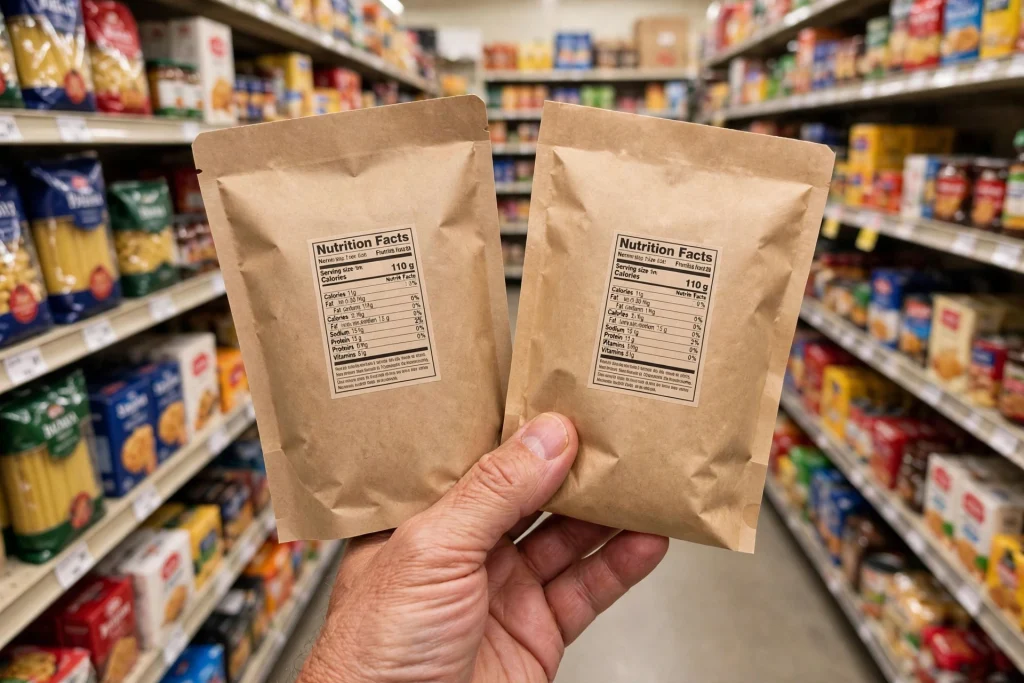
Step 1: check the amount the label describes
Start with the serving size and the number of servings in the container. The nutrition figures may describe one portion of the package rather than the whole thing. This is easy to miss when a bottle or packet looks like something one person would finish.
A listed serving is a basis for the nutrition information. It is not automatically the amount you should eat. Your actual portion may be smaller or larger, and that changes the amount of each nutrient you consume.
Match the figures to your usual portion
Imagine a packet whose label describes a 30-gram serving, while you usually eat about 60 grams. The amounts for your portion would be approximately twice the figures shown for one serving. The arithmetic is simple, but the first step is noticing the difference.
You do not need to weigh every food forever. Measuring a familiar bowl once can help you understand what a listed serving looks like. After that, you may be able to make a more realistic comparison without turning every meal into a calculation.
Compare the same amount across brands
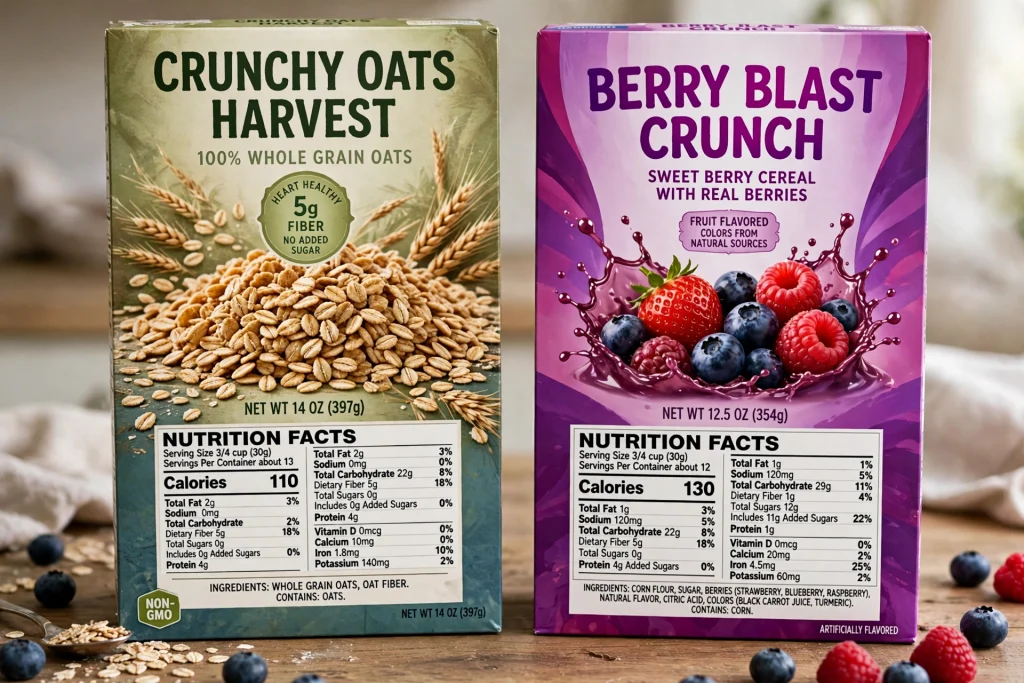
Two products may use different serving sizes. One cereal might list a small portion and another a larger one. If you compare those columns directly, the product with the smaller serving can look lower in everything even when the foods are similar.
Use the figures per 100 grams or per 100 milliliters when available, or compare equivalent portions. This gives you a fairer basis before considering taste, price and how much you are likely to eat.
Step 2: decide which information matters for this food
Not every shopping decision needs the same comparison. For a breakfast cereal, you might look at fiber and added sugar. For soup, sodium may be a useful focus. For a plant drink replacing milk, fortification and protein may deserve attention.
Choosing a purpose keeps the label manageable. If you try to find the lowest number in every column, you may end up rejecting foods without understanding what you need from them. Nutrition is not a game in which every number should be as small as possible.
Keep the food’s role in mind
Ask how you will use the product. A small amount of a condiment is different from a food you eat in a large serving every day. The amount and frequency help determine which differences are meaningful for your routine.
For example, comparing two everyday lunch options may be more useful than spending several minutes choosing between two occasional treats. Focus your attention where it can improve a repeated habit rather than trying to optimize every single purchase.
Use a personal plan when you have one
If a clinician has given you a sodium, carbohydrate or other dietary target, use that guidance. A general front-of-pack symbol cannot account for your diagnosis, medicines or individual needs.
Bring a confusing label to a dietitian, pharmacist or another appropriate professional if needed. It is reasonable to ask how the information relates to your actual portions. Clear practical advice is more useful than trying to interpret a medical diet from a few internet slogans.
Step 3: understand the wording around sugar
Where both are listed, total sugars and added sugars describe different things. Total sugars can include sugars naturally present in ingredients. Added sugars are introduced during processing or preparation. The label format determines how this information is presented.
A food with naturally occurring sugar is not automatically the same as a product with a large amount of added sugar. Equally, a no-added-sugar claim does not tell you everything about a food or drink. Read the wider information rather than relying on one phrase.
Compare similar foods rather than unrelated ones
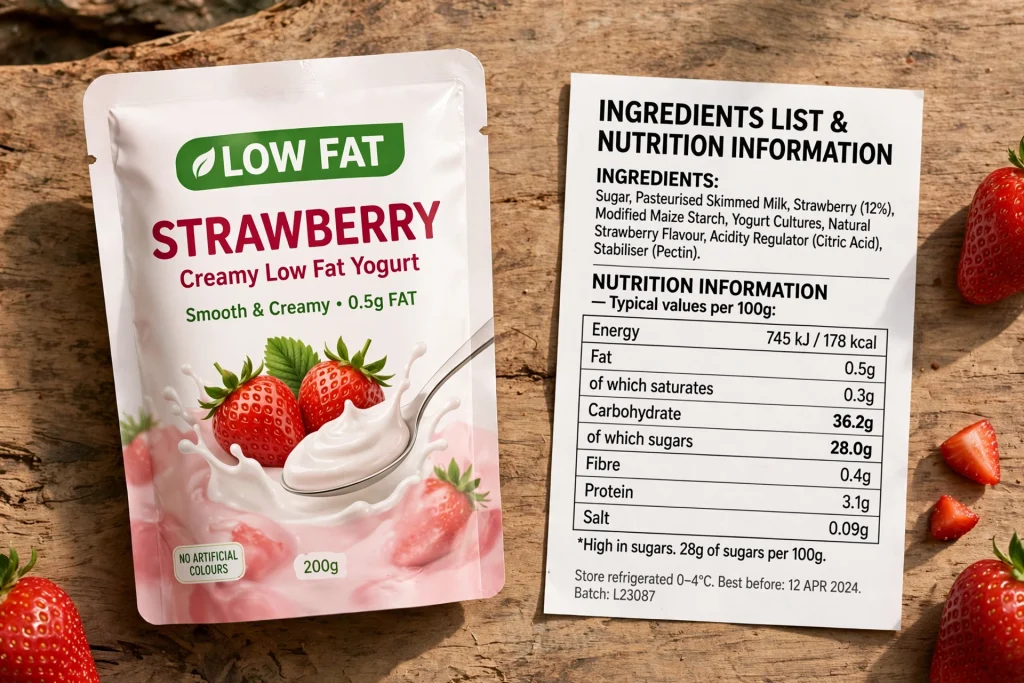
It is usually more useful to compare two similar yogurts than to compare a yogurt with a packet of crackers only by their sugar figures. Different foods have different roles and ingredients.
For a repeated purchase, choose the comparison that answers your actual question. If you want an everyday yogurt, compare suitable options in that category, check the portion and consider the rest of the meal. A single nutrient should not erase all the other information.
Treat front-of-pack claims as a starting point
Words such as natural, light or made with fruit can attract attention. They do not replace the nutrition panel or ingredient list. A product may highlight one positive feature while leaving other details less visible.
You do not have to assume every claim is misleading. Simply check what the claim means for the product you are buying. If the information does not answer your question, compare another product or ask the manufacturer for clarification.
Step 4: read the ingredients and allergen information
The ingredient list helps explain what the product contains. Ingredients are generally listed in order of weight, with larger contributions appearing earlier. It does not usually tell you the exact amount of every ingredient.
For people with food allergies, this part of the package has a different level of importance. Read the allergen information carefully and follow your allergy plan. A familiar brand or a product you have bought before is not a reason to skip checking.
Look again when the package or recipe changes
Manufacturers can change ingredients. A new flavor, a new pack size or a reformulated product may not be identical to the version you remember. Check the label on the actual package you are about to use.
If allergen information is unclear, do not guess from the product name or picture. Contact the manufacturer or choose a suitable alternative. Serious allergy decisions need reliable information, not an assumption that a food probably has not changed.
Do not judge ingredients only by name length
A long ingredient name is not, by itself, evidence that a food is harmful. Equally, a short list does not automatically make a food suitable for every person. Context and your needs matter.
Use the list to answer specific questions, such as whether a food you avoid is present or whether the main ingredient matches what you expected. Avoid turning unfamiliar spelling into a complete nutrition judgment.
Step 5: make a practical decision
Once you have checked the serving basis, the nutrients relevant to your goal and any ingredient concerns, decide whether the product fits your routine. Price, taste, availability and preparation time also matter.
The best choice on paper is not especially useful if you cannot afford it or will not eat it. A small improvement in a food you regularly buy may be more sustainable than an expensive product that you purchase once and abandon.
Compare cost in a useful way
Look at the price for a comparable amount, not only the price of the package. A larger container can be better value, but only if you can store and use it before it spoils.
Consider waste as part of the decision. If a product is rarely finished, a smaller pack may be the more practical choice even when its unit price is higher. The label can support a sensible purchase without making the decision for you.
Worked example: choosing a breakfast cereal
Suppose two cereals use different serving sizes. First compare the same amount, then look at the details that matter to you, such as fiber and added sugar where listed. Check whether you actually enjoy either option and what you will eat with it.
The goal is not to select a cereal that wins every possible comparison. It is to choose a suitable breakfast food that fits your wider meal. Milk or an appropriate alternative, fruit and your usual portion all affect what the breakfast becomes.
Avoid comparing a tiny serving with a full bowl
A small printed serving can make a product seem very different from the portion you normally pour. Notice the bowl you use and whether you usually go back for more.
If you decide to measure once, use the result as information rather than a rule that you must never change. Appetite varies. Understanding the label helps you make a conscious choice about the amount, instead of accidentally comparing two different quantities.
Worked example: choosing a packaged drink
A bottle may list figures per serving, per 100 milliliters or both. Check the full bottle size and think about whether you usually drink all of it. Compare equivalent volumes before deciding which option contains less sugar.
A sports image, fruit picture or vitamin claim does not tell you how much sugar is in the drink. The nutrition panel gives a clearer basis for comparison. Your usual frequency and portion matter as much as the product’s marketing.
Include what you add afterward
If a drink requires preparation, check whether the figures apply to the dry product or to a prepared serving. Added milk, sugar or other ingredients can change what ends up in your cup.
Read the preparation notes rather than assuming all products use the same basis. This is particularly helpful when comparing powders, concentrates or drinks made from a mix. A fair comparison needs to describe what you will actually consume.
Worked example: choosing a plant drink
Plant drinks vary in ingredients, protein and added nutrients. If you are using one in place of milk, check whether it provides the nutrients you expect. Similar packaging does not mean similar nutritional content.
Think about the role of the drink in your diet. A small splash in tea is different from using several servings as a major dairy replacement. If your diet excludes several food groups, professional advice may help you choose appropriate alternatives.
Check the specific product, not just the brand
One brand may sell fortified and unfortified products, sweetened and unsweetened versions, or drinks made from different ingredients. Read the label on the version you actually buy.
Keep a note of the features that matter to you so the next shopping trip is easier. You do not need to research the entire shelf every time. A few reliable options can reduce effort while still leaving room for variety.
Common label-reading mistakes
The most common difficulty is comparing numbers without comparing amounts. Another is treating a single claim as a complete description of the product. Both mistakes are easy to make when you are shopping in a hurry.
You can reduce confusion by following the same short order each time: serving basis, relevant nutrients, ingredients and practical fit. Repeating a simple method is more useful than trying to memorize every label term at once.
Do not let a label create unnecessary food anxiety
Labels are tools, not a scorecard for your worth or willpower. You do not need to analyze every food at a celebration or feel that one purchase has ruined your diet.
If tracking and comparison become distressing or lead you to avoid more and more foods, seek appropriate support. The purpose of nutrition information is to help you make workable choices, not to make ordinary eating feel unsafe or impossible.
Questions about using food labels
A few clear habits are enough for many everyday decisions. You can begin with one product category that you buy often, practice a fair comparison and gradually become more comfortable with the information.
Is the lowest-calorie option always best?
No. The role of the food, your appetite, your overall diet and any personal health advice all matter. A lower number does not automatically mean the product provides what you need from that meal or snack.
Compare the features relevant to your goal and consider the whole eating pattern. If you need a personal calorie plan, get suitable guidance rather than choosing every food solely by the smallest figure on its package.
Do I need to read every label every time?
You can become familiar with ordinary products, but check again when ingredients or medical needs matter, particularly for allergies. Packaging and recipes can change, and a different flavor may have different information.
For general shopping, start with your most frequent purchases. Learn the serving basis and the details that affect your decision. A calm, repeatable method is more helpful than trying to become an expert during one supermarket visit.
Sources and further reading
The sources listed here back up the general health information in this guide. The examples and daily routines are practical illustrations — not personal medical advice.
This article is for general education only. It was created with AI assistance and has not been clinically reviewed. For guidance about your own situation, please speak with a qualified health professional.