
Harmful Warning Signs: Sometimes, we experience certain physical ailments—such as fatigue, weakness, a dry throat, or dizziness—that should not be ignored, as they could eventually develop into life-threatening diseases. If detected and treated in time, we can prevent our bodies from falling victim to such illnesses.
Different signals manifest in various ways across different bodies, which is why people sometimes overlook them. However, today we will discuss these potentially harmful warning signs in detail so that you can recognize negative changes in your body and take appropriate action.
Types Of Symptoms
We can categorize these symptoms into three groups, making it easier for you to make the right decision for yourself.
- 🟢 Early Warning Signs: These are the initial stages of symptom onset; if identified during the early phase, complete treatment is possible for conditions such as diabetes, respiratory issues, tuberculosis, and cancer. While treatment is sometimes possible even at the stage of a critical emergency warning, this applies only to specific conditions, and successful outcomes are rare.
- 🟠 Serious Warning Signs :This is an intermediate stage where people begin to experience and notice symptoms—such as persistent headaches and a cough (which is also a symptom of TB). If treated promptly by the right doctor, recovery is possible at this stage.
- 🔴 Emergency Warning Signs :This is a situation where treatment is technically possible, yet doctors are able to fully cure the patient in very few cases; this is because, at such an advanced stage of the disease, the patient’s body often lacks the necessary immunity to withstand the rigors of treatment.
5 Serious Harmful Warning Signs That Require Medical Attention
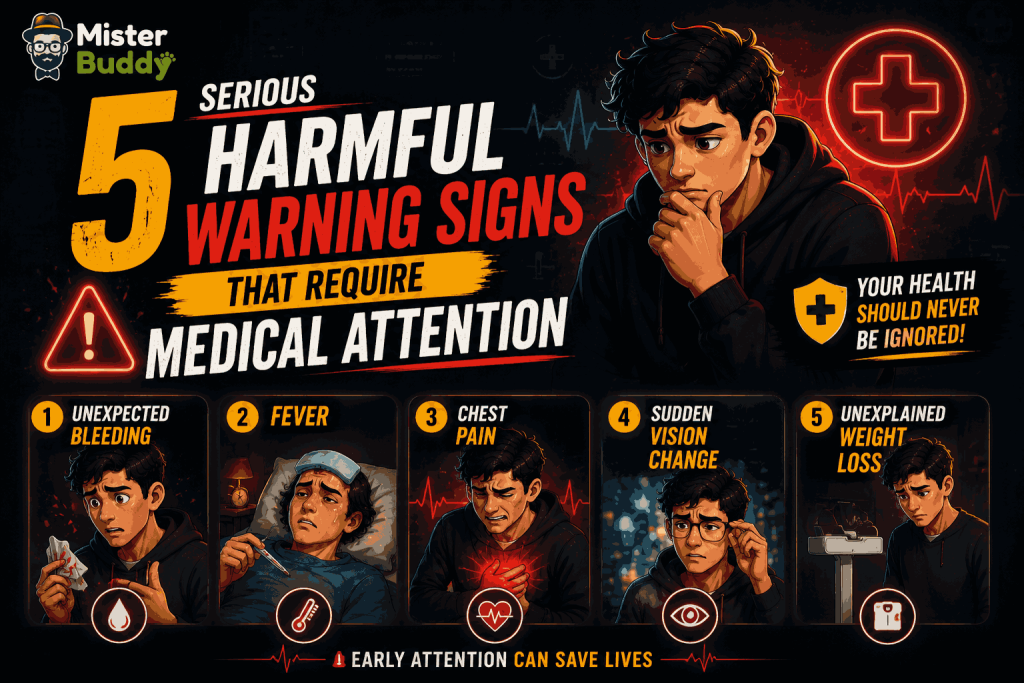
We have now reached the point where I will tell you about some serious symptoms; recognizing them yourself can help you prevent your body from suffering from a major illness.
Unexpected Bleeding
Blood is vital to the body, and its condition cannot be ignored. For instance, if there is sudden bleeding—whether through urine, stool, coughing, or the nose—do not overlook it, as it could signal a serious underlying problem.
Blood in the urine indicates the presence of a stone or an injury in the urethra. While a stone is the most common cause in such cases, you should consult a doctor if you are experiencing this issue.
Secondly, if you notice blood in your stool or while coughing, these could be symptoms of conditions like cancer; early treatment offers the best chance of recovery, whereas the problem tends to worsen over time. For instance, blood in the stool could indicate conditions like piles or fissures. Ignoring these signs is akin to jeopardizing your life and allowing the ailment to become more severe.
Fever
While a fever may seem like a minor ailment, if it persists for a long time or keeps recurring, it could indicate a serious condition such as Chikungunya. For the best treatment, consult a qualified doctor right from the start.
If your body temperature rises above 100 degrees, understand that a fever is setting in and cannot be treated without consulting a doctor; however, in an emergency situation, you can take Dolo Tablet or dynapar , as they are quite effective for such cases.
Chest Pain
The symptoms can vary widely, but the most commonly observed ones include chest pain, heaviness, tightness, or a sensation of pressure; such issues—whether related to the heart or lungs—can signal serious underlying conditions affecting the chest.
Symptoms resulting from this—such as chest pain accompanied by shortness of breath, dizziness, cold sweats, and vomiting—can serve as warning signs that should not be ignored.
If this is a new occurrence, you might wait a day; however, if you have pre-existing heart-related conditions—such as high blood pressure, diabetes, or high cholesterol—consult a doctor as soon as possible. Heart-related issues can lead to critical situations like a heart attack.
Sudden Vision Changes
Do not take any vision-related issues lightly; symptoms include blurred vision, reduced vision, black spots or flashes of light before the eyes, the sensation of a curtain-like obstruction, severe eye pain, redness, or headaches.
This condition can lead to permanent vision loss, hindering daily activities such as driving, reading, and moving around. Ignoring it could result in long-term vision problems and force you to wear glasses. To avoid this, consult an eye specialist as soon as possible.
However, to prevent eye problems, a balanced diet—including vitamins A, C, and E, as well as omega-3—is recommended; additionally, incorporating eye exercises helps maintain good vision.
Unexplained Weight Loss
Symptoms such as sudden weight loss—including reduced appetite, weight loss without dieting, persistent weakness, lack of energy, and fatigue—can be associated with this condition, as the weight loss is a direct result of its impact.
These could be signs of conditions like thyroid issues, diabetes, cancer, infections, or digestive disorders, though that is not always the case; sometimes, weight loss occurs due to mental stress. We have written an article on How to Reduce depression and Anxiety—do give it a read.
Pay Attention to Your Body’s Signals
Sometimes, we fail to understand why certain issues—such as the symptoms mentioned earlier—are occurring in our bodies; however, these can eventually develop into serious illnesses.
You should get a regular body check-up every three to four months. Whenever you notice symptoms—such as headaches or fatigue—consult a doctor immediately; these can be early signs of a serious illness, and early diagnosis makes treatment much more effective.
Sources and further reading
The sources listed here back up the general health information in this guide. The examples and daily routines are practical illustrations — not personal medical advice.
This article is for general education only. It was created with AI assistance and has not been clinically reviewed. For guidance about your own situation, please speak with a qualified health professional.
